
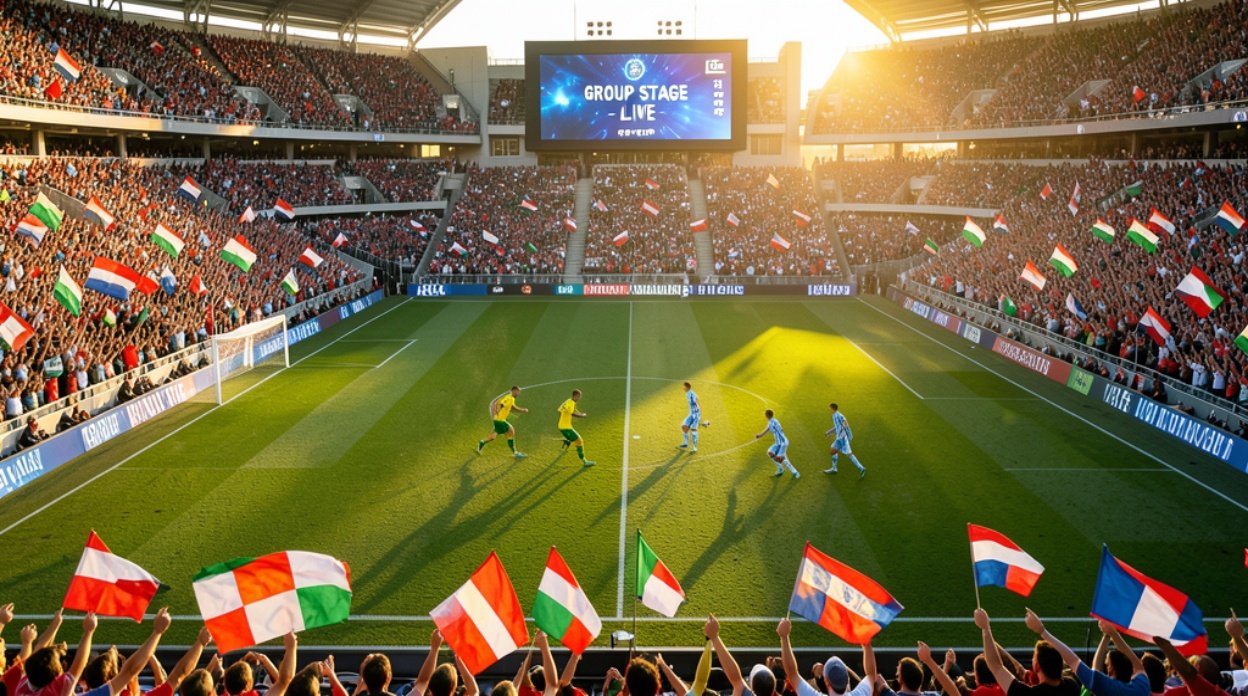
The global football landscape has shifted on its axis. The 2026 Soccer Summer across North America is not merely the largest tournament in the sport’s history; it is a sprawling, beautiful, and utterly unpredictable tactical laboratory. By expanding the tournament to 48 nations, the organizers unlocked a level of competitive volatility that few pundits anticipated. Far from diluting the quality of the competition, the newly minted structural blueprint has turned the opening phase of this global football season into a high-stakes arena of sheer chaos.
When the tournament expanded, traditionalists feared that a larger field would lead to uninspiring, one-sided matches and a lack of competitive urgency. Instead, what we are witnessing across the pitches of Canada, Mexico, and the United States is a relentless, drama-fueled spectacle. The combination of structural design, desperate tactical adjustments, and the sheer physical demands of a continental-scale tournament has created the perfect storm. Here is an in-depth tactical and structural analysis of why the 48-team format 2026 Soccer Summer is delivering the most chaotic and thrilling group stage the sport has ever seen.
—
The Mathematical Architecture of Mayhem: 12 Groups of Four
The primary catalyst for this summer’s unprecedented group-stage drama is the decision to abandon the initially proposed three-team group structure in favor of twelve groups of four. This structural choice saved the tournament’s competitive integrity but supercharged the mathematical permutations required to reach the knockout rounds.
The Resurrected Best Third-Place Safety Net
Under the traditional 32-team system, the equation was brutally simple: finish in the top two or go home. In the 48-team format 2026 Soccer Summer, however, the safety net of the “best third-place” teams introduces a massive variable. With 32 teams advancing to the first-ever knockout Round of 32, the top two teams from each of the twelve groups qualify automatically, joined by the eight best-performing third-place finishers.
This dynamic has completely eliminated the concept of the “dead rubber” match. In previous tournaments, a team with zero points after two games was often mathematically eliminated, playing their final match merely for pride. Now, a single thumping victory in the final group game can catapult a team from the bottom of their group into the bracket of the top eight third-place finishers. Consequently, every single goal scored or conceded across all twelve groups has a direct, real-time impact on the live standings of teams playing thousands of miles away. The psychological weight of this format means players are fighting for goal difference until the final whistle, leading to frantic, end-to-end soccer in the dying embers of group-stage matches.
Simultaneous Final-Round Drama on a Continental Scale
Because the performance of third-placed teams is measured against teams in other groups, the final matches of the group stage are no longer self-contained. When El Tri fights for a crucial goal in the altitude of Mexico City, their success can instantly jeopardize the qualification hopes of an underdog fighting for a draw in Toronto. Managers are no longer just monitoring their immediate opponents; coaching staffs are glued to live-updating tablets, tracking the goal differences, yellow card counts, and active goalTallies of teams in entirely different groups. This interconnectedness has turned the final matchdays into a multi-venue psychological thriller.
—
Tactical Volatility: How the Underdogs Weaponized the Format
The expansion of the tournament has welcomed debutants and historical underdogs who have arrived in North America not merely to participate, but to disrupt. These teams have analyzed the structural realities of the 48-team format and tailored their tactical frameworks to maximize chaos.
The Low-Block and Transition Blitz
Faced with superior technical squads, lower-ranked nations have perfected the art of the mid-to-low defensive block coupled with lightning-fast transitional play. Rather than attempting to match possession-heavy powerhouses pass-for-pass, these underdogs are comfortable defending in a compact 5-4-1 or 4-5-1 shape, denying space between the lines, and waiting for the perfect moment to strike.
When turnovers are forced, transition paths are highly vertical. Teams are bypassing the midfield entirely, utilizing rapid wingers to exploit the spaces left by overlapping fullbacks of dominant teams. Because a single win and a decent goal difference can secure passage to the Round of 32, these underdogs do not need to dominate entire matches; they only need to master moments. This has resulted in several shocking upsets where traditional giants, despite registering over 70% possession, have been picked apart by clinical counter-attacking units.
The Death of the “Cruising” Giant
In previous editions, elite footballing nations could afford to play in second gear during the group stage, conserving energy for the deeper rounds. The 48-team format 2026 Soccer Summer has made this a highly dangerous strategy. Because the margin for error is so slim, and because the threat of dropping into the third-place lottery is ever-present, traditional powerhouses cannot afford to rotate their squads heavily or drop intensity.
When a giant tries to coast, they are met by highly motivated, physically peak opponents who treat every group match like a cup final. This clash of mentalities has repeatedly led to chaotic second halves where desperate favorites are forced to throw their star attackers onto the pitch to rescue a point or preserve a goal-difference advantage.
—
Evaluating the Numbers: Group Stage Complexity
To understand the sheer scale of the qualification process, we must look at how the third-place ranking system functions. The table below illustrates the live tracking metrics utilized to determine which eight of the twelve third-place finishers survive the group-stage cull.
| Rank | Group | Team Status | Points | Goal Difference (GD) | Goals Scored (GS) | Fair Play Points | Current Qualification Status |
|---|---|---|---|---|---|---|---|
| 1 | Group A | Strong Contender | 4 | +2 | 4 | -2 | Qualified (Round of 32) |
| 2 | Group E | Strong Contender | 4 | +1 | 3 | -4 | Qualified (Round of 32) |
| 3 | Group C | Mid-Tier Solid | 4 | 0 | 2 | -1 | Qualified (Round of 32) |
| 4 | Group L | Mid-Tier Solid | 3 | +1 | 5 | -3 | Qualified (Round of 32) |
| 5 | Group H | Underdog Surprise | 3 | 0 | 3 | -2 | Qualified (Round of 32) |
| 6 | Group F | Fighting Chance | 3 | 0 | 2 | -5 | Qualified (Round of 32) |
| 7 | Group J | Fighting Chance | 3 | -1 | 4 | -2 | Qualified (Round of 32) |
| 8 | Group B | On the Bubble | 3 | -1 | 2 | -4 | Qualified (Round of 32) |
| 9 | Group K | In Jeopardy | 3 | -2 | 3 | -3 | Eliminated |
| 10 | Group G | In Jeopardy | 2 | -1 | 2 | -1 | Eliminated |
| 11 | Group D | In Jeopardy | 1 | -3 | 1 | -6 | Eliminated |
| 12 | Group I | In Jeopardy | 1 | -4 | 0 | -2 | Eliminated |
This grid shifts continuously with every goal scored across the continent. A single 90th-minute strike in Vancouver can immediately demote a team in Dallas from 6th to 9th in the third-place standings, turning an evening of celebration into one of sudden heartbreak.
—
Case Studies in Group Stage Mayhem
The practical application of this format has produced fascinating tactical storylines across the host nations. Let us examine how some of the most prominent setups have navigated this continental storm.
El Tri and the Host Nation Pressure Cooker
Playing in front of passionate home crowds, El Tri entered the tournament under immense tactical scrutiny. Tasked with playing proactive, dominant football, their group-stage journey highlighted the dangers of the expanded format. Against highly defensive opponents who set up to frustrate and counter-attack, El Tri was forced to commit bodies forward, exposing their center-backs to dangerous isolation.
When their second group-stage match ended in an unexpected stalemate, the final matchday became an absolute scramble. The coaching staff had to balance the desire to chase a multi-goal victory to win the group against the defensive pragmatism required to avoid a counter-attacking defeat that could drop them into the hazardous third-place calculations. It was a masterclass in tension, demonstrating that playing at home under the 48-team spotlight is as much a psychological test as a physical one.
La Albiceleste’s Depth Management Strategy
As reigning champions of South America, La Albiceleste entered the 2026 Soccer Summer with a target on their backs. Their tactical approach to the group stage offered a stark contrast to the desperation of others. Recognizing that the tournament now requires seven matches to reach the final, their coaching staff implemented a heavy squad rotation system during the group phase.
However, this strategy was put to the test when their opening opponents refused to follow the script. By deploying a high-intensity, player-oriented pressing system, the underdogs disrupted La Albiceleste’s build-up play from the back, forcing turnovers in dangerous areas. This tactical defiance forced the South American giants to abandon their conservation plans, throwing their elite playmakers into the fray in the second half to restore order. The lesson was clear: in this expanded field, no team is safe enough to cruise.
—
The Physical and Psychological Toll of Continental Scale
Beyond tactical formations and mathematical permutations, the physical geography of North America 2026 has played a massive role in creating group-stage chaos.
The Travel and Climate Conundrum
Teams are not just playing against opponents; they are battling diverse microclimates, high altitudes, and vast travel distances. A team might play their first match in the cool, damp climate of the Pacific Northwest, their second in the intense humidity of the Gulf Coast, and their third in the thin air of central Mexico.
This geographical diversity places immense physical strain on the athletes. Tactically, coaches are forced to adapt their pressing systems. High-pressing, energy-intensive tactics are nearly impossible to sustain for 90 minutes in extreme heat or altitude. Consequently, we have seen teams drop into mid-blocks for large portions of matches, saving their physical bursts for specific, high-leverage moments. This ebb and flow of intensity has led to wild swings in momentum within individual games, contributing to the overall sense of chaos.
The Shadow of the Round of 32
The introduction of the Round of 32 has changed the psychological horizon of the tournament. Previously, qualifying from the group meant you were just four wins away from lifting the trophy. Now, an extra knockout round looms. This extra match represents another 90 (or 120) minutes of physical wear and tear, potential suspensions, and tactical exposure.
This reality influences how teams manage the final minutes of group games. If a coach knows their team has secured qualification, do they risk their star players to hunt for a higher seed, or do they retreat into a low-block to preserve legs for the Round of 32? These conflicting priorities have led to highly unpredictable tactical decisions on the pitch, with some teams actively choosing to defend a draw rather than risking a transitional goal on the counter.
—
Tactical Innovations Sparked by the 48-Team Era
Adversity and complexity are the parents of tactical innovation. The demands of the 48-team format 2026 Soccer Summer have pushed coaches to develop new in-game strategies that we have rarely seen in traditional tournament play.
- In-Game Goal Difference Management: Coaches are no longer just instructing their players to “win” or “hold.” We are seeing tactical shifts specifically designed to manage goal differential. A team losing 2-0 might sub off a striker for an extra defensive midfielder in the 80th minute. While this looks like surrender, it is actually a highly calculated move to prevent conceding a third goal, which would severely damage their third-place ranking.
- The Five-Sub Tactical Split: With five substitutions available, managers are dividing their games into two distinct tactical phases. The starting XI is tasked with executing a highly disciplined, energy-conserving defensive plan. Around the 60-minute mark, a triple-substitution introduces fresh, high-pace attackers to exploit the fatigued defensive lines of opponents. This has made the final half-hour of matches incredibly chaotic and goal-rich.
- Asymmetrical Fullback Deployments: To combat the threat of rapid underdog counter-attacks, top-tier teams are increasingly utilizing asymmetrical defensive shapes. While one fullback bombs forward to join the attack, the opposite fullback tucks inside to form a temporary back-three, providing vital cover against transitional blitzes.
—
Conclusion: The Beautiful Game’s New Frontier
The 48-team format 2026 Soccer Summer has permanently altered the landscape of international football. By expanding the field and introducing the intricate web of the 12-group structure, the tournament has democratized the global stage while elevating the drama to dizzying heights.
The group stage is no longer a predictable prelude where the elite merely warm up for the “real” tournament. It has become a fierce, continent-wide survival struggle where tactical flexibility, physical endurance, and mathematical awareness are tested to their absolute limits. As the tournament progresses into the single-elimination rounds, the lessons of this chaotic opening phase will undoubtedly shape the future of soccer tactics for a generation. The big match is no longer just a game of football; it is a masterclass in managing beautiful, unpredictable chaos.
—
Frequently Asked Questions (FAQ)
How do the best third-place teams qualify in the 48-team format?
In the 48-team format 2026 Soccer Summer, the twelve groups of four produce 24 automatic qualifiers (the top two from each group). The remaining eight slots for the Round of 32 are awarded to the eight best-performing third-place teams. These teams are ranked in a single table based on: 1) Points, 2) Goal Difference, 3) Goals Scored, 4) Fair Play Points (disciplinary record), and 5) Drawing of lots if still tied.
Does the expanded format dilute the quality of the matches?
Quite the opposite. While there was concern about dilution, the format has actually incentivized lower-ranked nations to develop highly disciplined, compact tactical systems. Because a single victory can secure qualification to the Round of 32, underdogs play with immense belief and defensive structure, leading to highly competitive, dramatic matches against traditional giants.
How does the introduction of the Round of 32 impact team tactics?
The Round of 32 adds an extra single-elimination match to the tournament bracket, meaning teams must play seven matches in total to reach the final. This has forced managers to heavily prioritize squad depth, in-game rotation, and energy conservation, while also being careful not to slip up in a highly volatile group-stage environment.
How do travel and climate affect tactical setups in North America 2026?
The vast distances between venues in Canada, Mexico, and the United States, combined with varying altitudes and summer heat, make sustained high-pressing tactics extremely difficult. Teams are forced to be tactically flexible, often dropping into defensive mid-blocks to conserve energy and relying on explosive transitional sequences rather than continuous high-intensity running.
Why did the organizers choose 12 groups of four instead of 16 groups of three?
The initially proposed 16 groups of three would have eliminated simultaneous final-round matches, creating a high risk of collusion between the two teams playing the final game. By reverting to 12 groups of four, the tournament preserved the competitive excitement of simultaneous final matches, which ultimately delivered the incredible group-stage drama we are seeing this summer.
—