
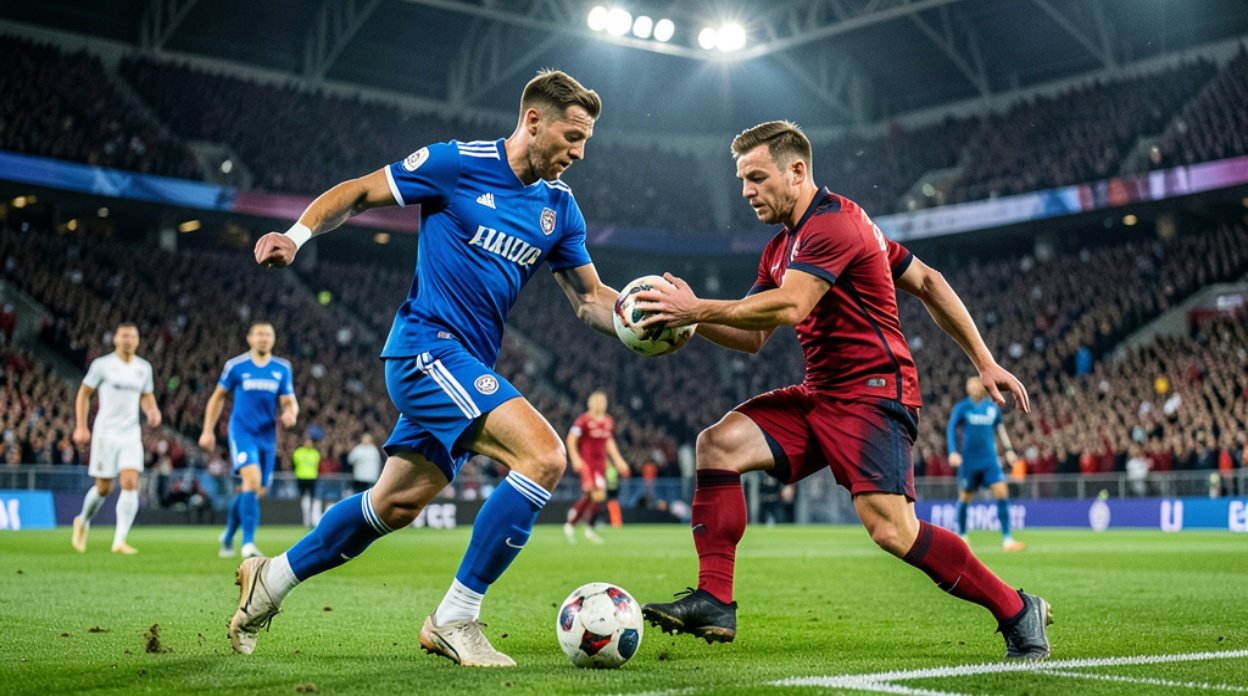
Haaland vs Kane Quarter-Finals: A Tactical Deep Dive into the Ultimate Strikers’ Showdown
The anticipation for a clash between two of football’s most prolific and globally recognized center-forwards, Erling Haaland and Harry Kane, on the grandest international stage, is nothing short of electrifying. Imagine a scenario where The Scandinavian Lions, spearheaded by their towering number nine, face off against The Three Lions, led by their talismanic captain, in the crucible of a Premier Global Showcase quarter-final. This isn’t just a match between two nations; it’s a monumental duel between two distinct yet equally devastating attacking philosophies, embodied by their respective spearheads. This hypothetical encounter promises to be a tactical masterclass, a psychological battle, and a showcase of elite footballing talent, where the fine margins could dictate the destiny of an entire nation’s dreams.
Such a fixture would transcend mere club rivalries, pitting national pride against individual brilliance. Both Haaland and Kane represent the pinnacle of modern striking, yet they achieve their goal-scoring feats through differing methodologies. Haaland, a force of nature, combines blistering pace, incredible strength, and an unerring finish, embodying the archetypal “nine” who lives to be in the box and terrorize defenses. Kane, on the other hand, offers a more nuanced, all-encompassing package: a sublime finisher, a visionary playmaker capable of dropping deep to orchestrate attacks, and a leader who inspires through his tireless work rate and tactical intelligence. This article will delve deep into what such a quarter-final clash would entail, analyzing the strengths of each striker, the tactical adjustments their teams would make, and the key matchups that would ultimately define this epic confrontation.
The Setting: A High-Stakes Quarter-Final
A quarter-final at a major international football tournament is a stage where legends are forged and dreams are shattered. The pressure is immense, the stakes are astronomical, and every pass, every tackle, and every shot carries the weight of national expectation. For both The Scandinavian Lions and The Three Lions, reaching this stage would signify a successful campaign, but neither side would be content with anything less than a semi-final berth, and ultimately, the ultimate glory. The atmosphere would be charged, the stadiums packed, and the eyes of the footballing world fixated on every moment.
The Grand International Football Tournament Stage
The Premier Global Showcase is the ultimate proving ground for national teams. Every four years, the finest footballing nations converge to compete for the most coveted prize in the sport. The quarter-finals are particularly brutal; having navigated the group stages and a tense Round of 16 match, teams are often fatigued but mentally hardened. This is where tactical acumen truly comes to the fore, where individual brilliance must be supported by cohesive team play, and where managers earn their reputations through astute decision-making. The history of this competition is littered with iconic quarter-final encounters, matches that delivered drama, upsets, and unforgettable moments. A Haaland vs Kane showdown would undoubtedly add another chapter to this rich tapestry, etching itself into the annals of football history as a battle of titans.
The journey to the quarter-finals itself would be a testament to the resilience and quality of both squads. The Scandinavian Lions, perhaps exceeding initial expectations, would have demonstrated a newfound maturity and tactical discipline, built around Haaland’s devastating attacking prowess. Their path might have involved overcoming a technically gifted South American side in the group stage and grinding out a victory against a defensively stout European opponent in the Round of 16. The Three Lions, perennial contenders, would have navigated their early fixtures with a blend of attacking flair and defensive solidity, showcasing the depth of talent within their ranks. Their journey might have seen them top a challenging group and then dispatch a formidable African giant in the knockout phase, setting the stage for this titanic clash. The narratives leading up to this point would amplify the significance of the quarter-final, making it not just a game, but a culmination of national aspirations.
The Weight of Expectation
For Erling Haaland, leading The Scandinavian Lions into such a match would carry the weight of an entire nation that has historically struggled to reach the latter stages of major tournaments. He would be seen not just as a striker, but as the symbol of a new, golden generation of Nordic football. His performances would be scrutinized for every touch, every run, and every attempt on goal. The expectation would be immense, a blend of hope and fervent belief that his prodigious talent can carry them further than ever before. For Harry Kane, the pressure would be equally intense, perhaps even more so, given The Three Lions’ consistent presence at the business end of global competitions and their passionate fanbase’s yearning for major international silverware. As captain, Kane would bear the responsibility of guiding his team, leading by example, and delivering the crucial goals or assists that could unlock a stubborn defense. Both players thrive under pressure, but a quarter-final environment amplifies it to an almost unbearable degree, testing not just their physical abilities but their mental fortitude and leadership qualities.
The media frenzy surrounding such an encounter would be unprecedented, with countless articles, analyses, and debates dissecting every facet of the matchup. Fans from both nations, and neutrals worldwide, would engage in fervent discussions about who holds the advantage, which tactical approach will prevail, and whose star striker will shine brightest. The narrative would be simple yet compelling: two of the world’s best, directly competing for a place in the semi-finals. This immense pressure, far from being a deterrent, often brings out the best in truly elite athletes. It transforms a game of football into a gladiatorial contest, where individual duels and moments of sheer brilliance can turn the tide in an instant. For both Haaland and Kane, this would be a defining moment in their international careers, a chance to solidify their legacies as true greats of the game.
Erling Haaland: The Nordic Goal Machine
Erling Haaland is a phenomenon, a striker who has redefined what it means to be a modern number nine. His impact on The Scandinavian Lions is transformative, providing them with a focal point of attack that is almost impossible to ignore. His game is built on a terrifying blend of physical attributes and clinical finishing, making him a constant threat inside and around the penalty area. His mere presence on the field alters how opposition teams approach the game, often forcing them to commit additional resources to contain him, which in turn can open up space for his teammates. In a quarter-final, his ability to create something from nothing, to turn a half-chance into a goal, would be absolutely crucial.
Physicality and Pace
Haaland’s physical profile is extraordinary. Standing tall with an imposing frame, he possesses an almost unparalleled combination of strength and explosive speed for a player of his size. This allows him to bully defenders, hold up the ball effectively, and, perhaps most terrifyingly, outrun opponents over short and long distances. When he hits top gear, he is virtually uncatchable, leaving even the fastest defenders trailing in his wake. This raw athletic power is not just for show; it’s a fundamental aspect of his game that enables him to break lines, get in behind defenses, and create scoring opportunities where none seemed to exist. His ability to accelerate from a standing start and maintain that pace for extended runs is a nightmare for any backline, especially one that plays a high defensive line. Furthermore, his aerial presence, while perhaps not his most talked-about attribute, makes him a dangerous target for crosses and set-pieces, adding another dimension to his threat profile.
Defenders facing Haaland are often caught in a dilemma: get too close, and he uses his strength to turn them; give him space, and he exploits it with his blistering pace. His powerful stride and relentless pursuit of the ball mean he is always a threat, even when seemingly out of the play. This physical dominance extends to his ability to shield the ball, drawing fouls in dangerous areas, and his relentless pressing from the front, often forcing errors from opposition defenders and goalkeepers. In a high-stakes quarter-final, where moments of individual brilliance can be decisive, Haaland’s physical gifts offer The Scandinavian Lions a constant outlet and a potent weapon, capable of disrupting even the most organized defensive setups. His sheer energy levels and relentless commitment to attacking plays mean he remains a threat for the full 90 minutes, and potentially beyond, in an extra-time scenario.
Clinical Finishing and Movement
Beyond his physical attributes, Haaland’s most defining characteristic is his ice-cold composure and clinical finishing. He possesses an uncanny ability to find the back of the net from almost any angle or situation, whether it’s a powerful shot, a deft chip, or a first-time strike. His shot power is immense, but it’s his precision and decision-making in front of goal that truly set him apart. He rarely snatches at chances, instead often opting for the most efficient and effective finish. This clinical edge is complemented by his intelligent off-the-ball movement. Haaland is a master of ghosting past defenders, finding pockets of space, and exploiting gaps in the defensive line. He makes intelligent runs, often timing them perfectly to stay onside, and has an innate sense of where the ball will land. His ability to anticipate passes and crosses allows him to be in the right place at the right time, consistently. He doesn’t just wait for service; he actively seeks to create space for himself and his teammates through his dynamic movement, drawing defenders out of position and opening up channels for others.
His finishing technique is varied and deadly. He can strike with power and accuracy with both feet, making him unpredictable. Whether it’s a thunderous left-footed drive from outside the box, a delicate right-footed finish inside the area, or a towering header, Haaland has a goal-scoring repertoire that leaves goalkeepers guessing. This versatility means defenders cannot simply funnel him onto his weaker foot, as both are equally capable of delivering a decisive blow. Furthermore, his ability to finish under pressure, with defenders closing in, is a hallmark of truly elite strikers. He maintains his composure, picks his spot, and executes with precision. This combination of intelligent movement and ruthless finishing makes him the ultimate penalty box predator, a player who needs only a sniff of a chance to punish the opposition. In a tight quarter-final, where chances might be few and far between, Haaland’s exceptional conversion rate would be a priceless asset for The Scandinavian Lions.
Impact on the Scandinavian Lions
For The Scandinavian Lions, Haaland is more than just a striker; he is the undisputed focal point of their offensive strategy. His presence elevates the entire team, giving them a legitimate threat against any opponent. His ability to hold up the ball and bring others into play, despite his primary role as a finisher, adds another layer to their attack. Opponents are so preoccupied with stopping Haaland that it often creates space for other attacking midfielders and wingers to exploit. The team’s tactics would undoubtedly revolve around getting him into dangerous positions, whether through direct long balls, quick transitions, or intricate build-up play. His sheer gravity on the pitch commands attention, often drawing two or even three defenders, thereby freeing up space for supporting runs from midfield or wide areas. This tactical advantage is invaluable in knockout football.
Haaland’s leadership, though perhaps not as vocal as Kane’s, comes through his relentless drive and commitment on the pitch. He sets the tone for the team’s intensity and desire to win. His scoring record for the national team, even if hypothetical for this tournament, would be a source of immense confidence for his teammates and a constant fear for the opposition. The Scandinavian Lions would play with a directness and purpose, knowing that with Haaland upfront, every attack has the potential to yield a goal. His work rate, even without the ball, is significant; he presses defenders, forces turnovers, and contributes to the team’s overall defensive effort from the front. This complete package makes him the linchpin of their ambition, a player capable of carrying his nation to unprecedented heights in the Premier Global Showcase. His youth and hunger for success also inject a vibrant, fearless energy into the squad, which can be contagious in high-pressure situations.
Haaland’s Tournament Journey So Far (Hypothetical)
In this hypothetical Premier Global Showcase, Erling Haaland has been nothing short of sensational for The Scandinavian Lions. He would have finished the group stage as one of the tournament’s leading scorers, perhaps with 4 goals from 3 matches, including a crucial brace against a strong Western European adversary. His opening goal against a defensively sound Eastern European side in the group stage, a powerful header from a corner, showcased his aerial prowess, while a solo effort against a North American opponent demonstrated his blistering pace and clinical finishing. In the Round of 16, he might have been the difference-maker in a tight 2-1 victory over a resilient Central European team, scoring the winning goal with a characteristic powerful drive from the edge of the box in extra time. These performances would not only have propelled his nation into the quarter-finals but also solidified his status as a contender for the tournament’s golden boot, driving immense confidence into his team and instilling fear into their next opponents. His journey would be a narrative of overcoming challenges and seizing crucial moments, elevating his individual legend with each passing game.
Harry Kane: The English Vanguard’s Maestro
Harry Kane stands as one of the most complete strikers of his generation, a player whose influence extends far beyond mere goal-scoring. For The Three Lions, he is the captain, the primary goal threat, and a key creative hub, often dictating the tempo of their attacks. His ability to drop deep, link play, and deliver pinpoint passes is as vital as his prolific record in front of goal. In a quarter-final against an opponent with a force like Haaland, Kane’s multifaceted skill set would be absolutely critical, not only for converting chances but for creating them and alleviating pressure on his midfield.
Prolific Goal-Scoring and Playmaking
What truly distinguishes Harry Kane is his dual threat as both a prolific goal-scorer and an elite playmaker. He possesses an exquisite range of finishing, capable of scoring with both feet, from distance, inside the box, and from set-pieces. His penalty taking is near-perfect, a crucial asset in tight knockout games. However, his ability to drop into midfield and spray passes, unlock defenses with through balls, and link up with wingers and attacking midfielders is what makes him a truly unique center-forward. He has an exceptional footballing brain, always aware of his surroundings, and capable of identifying and exploiting weaknesses in the opposition’s formation. This playmaking dimension adds an unpredictable element to The Three Lions’ attack, making them harder to defend against than a team relying solely on a poacher.
Kane’s vision and passing range are akin to those of a seasoned attacking midfielder. He can deliver long, accurate diagonal balls to switch the play, delicate chipped passes over defensive lines, or incisive through balls that split open the tightest of backlines. This means that even when he’s not scoring, he’s actively contributing to offensive phases, often being the architect of goals scored by his teammates. His hold-up play is also exceptional; he can receive the ball under pressure, shield it from defenders, and lay it off to a teammate in a better position, allowing The Three Lions to build attacks effectively. This combination of goal-scoring prowess and creative genius makes him an indispensable asset, a player who can single-handedly change the complexion of a game through either a decisive finish or a moment of ingenious playmaking. In a quarter-final, such versatility is invaluable, providing multiple avenues for attacking success.
Leadership and Experience
As captain of The Three Lions, Harry Kane embodies leadership both on and off the pitch. His calm demeanor, unwavering work ethic, and consistent performances serve as an inspiration to his teammates. He leads by example, often being the first to press, to track back, or to demand more from his colleagues. His vast experience in high-stakes matches, both at club level and in previous major international tournaments, would be a critical factor in a quarter-final. He understands the psychological demands of knockout football, the need to remain composed under intense pressure, and the importance of seizing decisive moments. This experience allows him to guide younger players, maintain team morale, and make crucial interventions during challenging periods of a match.
Kane’s leadership isn’t just about wearing the armband; it’s about his influence on the team’s tactical discipline and mental resilience. He organizes the press from the front, communicates with his midfielders, and often dictates the tempo of The Three Lions’ attacking phases. In moments of adversity, he is the player who steps up, whether it’s by winning a crucial aerial duel, making a vital defensive clearance from a set-piece, or, most importantly, delivering a decisive goal. His presence alone instills confidence in his teammates, knowing they have a world-class leader and finisher to rely on. In a quarter-final environment, where nerves can often get the better of players, Kane’s steady hand and seasoned leadership would be an invaluable commodity, providing a calming and focused presence amidst the chaos.
Impact on The Three Lions
Harry Kane’s impact on The Three Lions is profound and multi-layered. He is the central pillar around which their attacking system is built. His ability to drop deep creates space for wide forwards and attacking midfielders to run into, turning him into a de facto attacking midfielder at times. This tactical flexibility makes The Three Lions’ attack highly dynamic and difficult to predict. When he receives the ball in deeper areas, he can either turn and drive forward, looking for a shot, or unlock defenses with a precise pass. This movement also allows The Three Lions to transition quickly from defense to attack, as Kane can initiate counter-attacks with his excellent distribution. Furthermore, his presence provides a constant aerial threat in the box, drawing defenders and creating opportunities for others.
Beyond his direct contributions, Kane’s tactical intelligence helps the team maintain shape and balance. He understands when to press, when to hold his position, and how to create overloads in specific areas of the pitch. This intelligence is vital for a team aiming for success at the Premier Global Showcase, where tactical nuances can make all the difference. His unwavering consistency in delivering goals and assists instills a deep sense of confidence throughout the squad, knowing they have a player who can deliver in the biggest moments. The Three Lions’ offensive strategies are designed to maximize Kane’s unique skill set, whether it’s through quick combinations around the box, direct crosses, or through balls over the top. He is not merely a finisher; he is the fulcrum of their attack, a complete forward who elevates the entire team’s performance and significantly enhances their chances of progressing to the semi-finals.
Kane’s Tournament Journey So Far (Hypothetical)
Harry Kane’s journey through this hypothetical Premier Global Showcase would have been a testament to his all-around brilliance. He might have opened his account with a trademark penalty against a resilient South American side in the group stage, followed by a crucial assist for a teammate in a challenging encounter with a skilled Asian team. In the final group game against a North African opponent, he could have scored a superb goal from outside the box, showcasing his long-range shooting ability, and provided another assist, demonstrating his playmaking prowess. In the Round of 16, Kane would have been instrumental in a commanding 3-0 victory over a strong Central American team, scoring one goal and setting up another with a perfectly weighted through ball, illustrating his ability to both finish and create. These performances would have seen him not only as a top contender for the golden boot but also as a leading candidate for the tournament’s best player, highlighting his immense value to The Three Lions and setting the stage for his quarter-final showdown.
Tactical Battleground: How Teams Would Adapt
The tactical battle in a Haaland vs Kane Quarter-Finals would be a chess match between two astute coaching staffs. Each team would have to devise a strategy not only to maximize their own striker’s impact but also to neutralize the opposing team’s primary threat. This would involve specific defensive assignments, midfield skirmishes, and intelligent offensive patterns. The managers’ decisions regarding formation, pressing schemes, and player roles would be under intense scrutiny, as a single tactical misstep could prove fatal.
Defending Haaland: The Challenge
Defending Erling Haaland is a monumental task that requires a multi-faceted approach. The Three Lions’ central defenders would face the ultimate test of their physicality, positioning, and mental strength. A common strategy would involve a combination of man-marking and zonal defense. One strong, physical center-back would likely be assigned the primary task of tracking Haaland’s runs, staying tight to him, and attempting to disrupt his rhythm. This defender would need exceptional strength, pace, and aerial ability. However, simply man-marking Haaland is often not enough, as his movement can drag defenders out of position, creating space for others. Therefore, a zonal approach from the second center-back and defensive midfielder would be crucial, ensuring that if Haaland does pull wide or drop deep, there’s cover in the central areas he vacates.
Additionally, disrupting the supply line to Haaland would be paramount. This would involve a concerted effort from The Three Lions’ midfield to press high, close down passing lanes, and win the ball back in central areas, preventing The Scandinavian Lions from playing intricate passes into their star striker. Limiting the space he has to run into, particularly behind the defense, would also be a key objective. A high defensive line might be risky, given Haaland’s pace, so a slightly deeper block, or a well-drilled offside trap, could be employed. Fullbacks would also need to be vigilant, as Haaland often drifts wide to receive the ball or to create space for central runs. The defensive strategy would demand constant communication, impeccable timing, and a collective effort to suffocate Haaland’s influence, forcing The Scandinavian Lions to find alternative routes to goal. Physicality in duels, smart fouling to break up play, and a relentless commitment to denying him clear sight of goal would be essential.
Containing Kane: A Multifaceted Approach
Containing Harry Kane presents a different, yet equally complex, challenge for The Scandinavian Lions. Given his tendency to drop deep and his exceptional playmaking abilities, simply assigning a single center-back to mark him is often insufficient. The strategy would need to focus on denying him space in central areas, particularly when he drops into midfield. This would likely involve a defensive midfielder closely shadowing him when he moves out of the attacking third, preventing him from receiving the ball with time and space to pick out passes. The center-backs would also need to be disciplined, ensuring they don’t get dragged too far out of position if Kane drops deep, creating gaps in the defensive line. Communication between the defensive midfielder and the central defenders would be vital to ensure seamless transitions in marking assignments.
Furthermore, limiting Kane’s shooting opportunities, both from inside and outside the box, would be a priority. This means aggressive closing down, ensuring he doesn’t have time to set himself for powerful strikes. Defending set-pieces against Kane would also be critical, given his aerial threat and penalty-taking prowess. The Scandinavian Lions would need to maintain a compact defensive shape, pressing him aggressively when he receives the ball, and forcing him into uncomfortable positions or hurried passes. The fullbacks would also play a role, stepping up to deny him crosses if he drifts wide, and ensuring that any runs from The Three Lions’ wingers or attacking midfielders are tracked. The goal would be to isolate Kane, disrupt his link-up play, and reduce his overall influence on the game, forcing The Three Lions to rely on other avenues for creativity and goal-scoring. This would be a collective defensive effort, requiring high levels of concentration and tactical discipline from every player on the pitch.
Midfield Dominance and Supply Lines
The battle for midfield dominance would be absolutely pivotal in this quarter-final. The team that controls the midfield will likely control the flow of the game and, crucially, the supply lines to their star striker. For The Scandinavian Lions, winning the midfield battle would mean quicker transitions, more direct passes into Haaland, and the ability to win second balls in advanced areas. Their midfielders would need to be physical, aggressive in the tackle, and capable of quickly moving the ball forward. For The Three Lions, midfield control would allow Kane to drop deeper, receive the ball, and orchestrate attacks with his superior vision and passing range. Their midfielders would focus on retaining possession, creating overloads, and feeding their wide players and advanced midfielders, knowing Kane will be there to finish or create the final pass.
The specific matchups in midfield would be fascinating. A dynamic midfielder for The Scandinavian Lions might be tasked with breaking up play and driving forward, supporting Haaland. The Three Lions, on the other hand, might deploy a more technically gifted midfield trio, focusing on intricate passing and tempo control. The ability of each team’s deep-lying playmaker to dictate play and shield the defense would be instrumental. Winning individual duels in the center of the park, pressing effectively, and making intelligent runs from deep would determine which team gains the upper hand. The side that can consistently deliver quality service to their respective main striker, while simultaneously disrupting the opposition’s supply, will hold a significant advantage. This central battle would be a war of attrition, demanding stamina, tactical discipline, and moments of individual brilliance from the engine room.
The Role of Fullbacks and Wingers
In modern football, fullbacks and wingers play an increasingly crucial role, and this quarter-final would be no exception. For The Scandinavian Lions, their wingers would need to provide width and support Haaland, either by delivering crosses into the box or by making intelligent runs into the space created by Haaland drawing defenders. Their fullbacks would be expected to push high, overlapping to provide additional attacking outlets and putting pressure on The Three Lions’ defensive flanks. This would stretch the opposition defense, potentially creating more space for Haaland in central areas. The quality of crosses delivered from wide positions would be paramount for Haaland to capitalize on his aerial and finishing abilities.
Conversely, The Three Lions’ fullbacks would have a dual responsibility: providing defensive solidity against The Scandinavian Lions’ wide players and Haaland’s movements, while also offering attacking impetus to support Kane. Their wingers would be vital in creating chances for Kane, either through direct runs, quick one-twos, or by cutting inside to shoot or cross. The interplay between Kane and his wide attackers, particularly when he drops deep, would be a key attacking pattern. The fullbacks’ ability to effectively defend against rapid wingers and then quickly transition into attack, delivering accurate crosses or making incisive runs, would be a significant factor in The Three Lions’ success. The battle down the flanks would be relentless, demanding high energy, defensive diligence, and attacking flair from both sets of wide players.
Key Player Matchups Beyond the Strikers
While the focus is on Haaland vs Kane, football is a team sport, and the outcome of this quarter-final would ultimately hinge on numerous individual battles across the pitch. These matchups, often unsung, would be critical in determining which team gains supremacy and provides their star striker with the platform to shine. Every player’s performance, from goalkeeper to defense to midfield, would contribute to the overall narrative and the final result.
Midfield Maestros
The midfield battle would feature some of the finest talents in international football. Imagine a tenacious defensive midfielder for The Three Lions tasked with breaking up play and shielding the defense, particularly from The Scandinavian Lions’ quick transitions and direct passes towards Haaland. This player would need to be disciplined, positionally aware, and excel in winning tackles and interceptions. On the other side, The Scandinavian Lions might deploy a dynamic box-to-box midfielder whose role is to drive forward, support Haaland, and track the runs of The Three Lions’ creative players. This matchup would be a constant struggle for control, dictating the tempo and flow of the game. The ability of these midfield maestros to win possession, distribute effectively, and influence both offensive and defensive phases would be crucial in determining which team can establish dominance in the central areas of the pitch.
Furthermore, the creative midfielders for both sides would play a vital role. The Three Lions might have an attacking midfielder renowned for their vision and ability to unlock defenses with intricate passes, providing crucial service to Kane or making late runs into the box. The Scandinavian Lions might counter with a technically gifted midfielder capable of carrying the ball forward, beating defenders, and linking up with Haaland. These creative sparks would be responsible for providing the moments of magic that can break open a tight game, whether through a killer pass, a dribble, or a speculative shot from distance. Their ability to operate under pressure, find pockets of space, and combine effectively with their respective star strikers would be a major determinant of their team’s attacking success.
Defensive Anchors
The central defensive pairings would face immense pressure. The Three Lions’ center-backs would have the unenviable task of containing Haaland. This would require exceptional communication, disciplined positioning, and raw strength. They would need to work in tandem, one possibly engaging Haaland directly while the other provides cover and sweeps up any through balls. Their ability to handle Haaland’s pace, power, and aerial threat would be crucial. For The Scandinavian Lions, their defensive anchors would need to be equally vigilant against Kane’s unique blend of finishing and playmaking. They would have to decide when to step up and challenge Kane when he drops deep, and when to hold their line, guarding against runs from The Three Lions’ other attackers. Their composure on the ball and ability to initiate attacks from the back would also be important, especially under a high press. The defensive solidity provided by these players would be foundational to their team’s ability to withstand pressure and launch their own offensive forays.
Creative Forwards
Beyond the main strikers, the supporting creative forwards and wingers would also be under the spotlight. For The Three Lions, an electrifying winger with blistering pace and dribbling skills could be tasked with stretching The Scandinavian Lions’ defense, creating space for Kane, and providing direct goal threats. This player’s ability to beat a man and deliver dangerous crosses or shots would be vital. The Scandinavian Lions might rely on a tricky winger or an attacking midfielder who can play intricate one-twos with Haaland, exploiting the attention he draws from defenders. These players would be responsible for providing width, directness, and moments of individual brilliance that can complement the primary threat of their respective star strikers. Their ability to take on defenders, create numerical advantages, and contribute to the goal-scoring tally would add another layer of complexity and excitement to this highly anticipated quarter-final clash.
Potential Outcomes and Decisive Moments
In a quarter-final of such magnitude, the outcome often hangs on fine margins and specific decisive moments. A moment of individual brilliance, a tactical gamble by a manager, or even a stroke of luck can swing the momentum. Predicting the exact nature of the game is challenging, but certain scenarios and aspects are almost guaranteed to play a crucial role in determining which team advances.
Set-Piece Scenarios
Set-pieces are often critical in tight knockout matches, and this quarter-final would be no exception. Both The Scandinavian Lions and The Three Lions would possess players capable of delivering dangerous free-kicks and corners, and both have aerial threats in Haaland and Kane, respectively. For The Scandinavian Lions, Haaland’s height, strength, and heading ability make him a formidable target in the box. Well-delivered corners or free-kicks could be a potent weapon, especially against a defense that might be preoccupied with containing him in open play. For The Three Lions, Kane’s ability to win headers and his impeccable penalty-taking record make him a constant threat. Any foul conceded in or around the box could be severely punished. Additionally, defensive organization during set-pieces would be paramount for both teams, as a momentary lapse in concentration could lead to a decisive goal. The ability to convert set-piece opportunities, or to defend them resolutely, could be the difference between progression and elimination.
Counter-Attacking Threats
Both teams would likely possess significant counter-attacking threats. The Scandinavian Lions, with Haaland’s blistering pace, would be particularly dangerous on the break. If they can win the ball deep in their own half and quickly release Haaland into space, he could wreak havoc on The Three Lions’ retreating defense. Their strategy might involve absorbing pressure and then launching rapid counter-attacks, utilizing Haaland’s ability to run onto through balls or long passes. The Three Lions, while perhaps more inclined to possess the ball, also have quick wingers and midfielders capable of breaking at speed. Kane’s ability to drop deep and distribute the ball quickly could initiate dangerous counter-attacks, releasing speedy wide players into space. The effectiveness of each team’s transition play, both defensively and offensively, would be a key factor. The ability to defend against fast breaks and to exploit opportunities to launch their own counter-attacks would be crucial for success in this high-stakes encounter.
Goalkeeper Performances
The goalkeepers for both nations would be under immense pressure and could easily emerge as the heroes or villains of the match. Facing shots from strikers of Haaland and Kane’s caliber requires exceptional reflexes, positioning, and mental strength. A single world-class save at a crucial moment could prevent a goal and shift the momentum of the game. Conversely, a mistake or a moment of indecision from a goalkeeper could prove to be incredibly costly. Their ability to command their area, organize their defense, and distribute the ball effectively would also be vital. In a match where chances might be at a premium, the goalkeepers’ performances would be magnified, with their every action scrutinized. Their composure under pressure, ability to make big saves, and reliability would be absolutely fundamental to their team’s chances of progressing.
The Mental Game and Pressure
Beyond the tactical and physical aspects, the mental game would be a huge determinant. A quarter-final in a Premier Global Showcase is a pressure cooker, and the team that can handle the occasion, remain composed, and execute their game plan under duress will have a significant advantage. Moments of frustration, fatigue, or individual errors can be severely punished. The leadership of players like Kane, and the relentless drive of players like Haaland, would be crucial in maintaining focus and motivation. The ability to recover from setbacks, whether it’s conceding a goal or missing a chance, would also be vital. The team that displays greater mental resilience, discipline, and a collective belief in their ability to win, even in extra time or a penalty shootout, will ultimately prevail. This psychological battle, often invisible to the casual observer, is as important as any tactical setup or physical prowess.
Historical Context and Legacy
A Haaland vs Kane Quarter-Finals would not only be a contest for a semi-final spot but also a battle with profound implications for the historical context and legacy of both players and their nations. Such a high-profile showdown would be etched into football history, adding another layer to the narrative of two generational talents and their pursuit of international glory.
Comparing Generational Strikers
This hypothetical match would provide a direct comparison between two generational strikers at the peak of their powers, each representing a different facet of the modern number nine. Haaland, the pure, devastating finisher, embodies the evolution of the athletic, goal-obsessed forward. Kane, the complete forward, showcases the increasing demand for strikers who can contribute to all phases of play, both scoring and creating. Their performances in this quarter-final would be endlessly debated and analyzed, feeding into the ongoing discussion about who is the better striker, or at least, who performed better when it mattered most on the grandest stage. Regardless of the outcome, the fact that they faced each other in such a crucial knockout game would forever link their careers, adding a legendary chapter to their individual stories and offering a unique insight into the diverse pathways to elite goal-scoring in contemporary football.
The Quest for International Glory
For both Haaland and Kane, winning the Premier Global Showcase with their respective nations would be the ultimate achievement, a pinnacle that often eludes even the greatest club players. This quarter-final would represent a crucial step towards that dream. For The Scandinavian Lions, reaching a semi-final would be an unprecedented success, a testament to their rise and Haaland’s pivotal role in it. For The Three Lions, for whom international success has been a long and often painful wait, a victory would be a significant milestone, fueling hopes of finally breaking their long silverware drought. The personal legacy of both players would be profoundly impacted by their performance in this match. Delivering a decisive moment in such a high-stakes encounter would elevate their status from club legends to true national heroes, forever immortalizing their contributions to their country’s footballing history. This quest for international glory adds an emotional depth that transcends the tactical intricacies of the game.
Impact on Their Respective Nations
The outcome of this quarter-final would have a lasting impact on the footballing landscape of both nations. For The Scandinavian Lions, a victory would inspire a new generation of players, boost national pride, and potentially lead to increased investment and development in their footballing infrastructure. It would validate their reliance on Haaland as their primary weapon and showcase their tactical evolution. For The Three Lions, a win would reinforce their status as a global footballing power, alleviate some of the historical pressure, and galvanize the nation behind their team’s continued pursuit of the trophy. A loss, conversely, would lead to introspection, questions about tactical approaches, and the weight of another missed opportunity. The match would not just be about football; it would be about national identity, sporting pride, and the emotional connection between a team and its people. The individual heroics of Haaland or Kane could ignite a national celebration or lead to widespread disappointment, highlighting the immense cultural significance of such a fixture.
| Attribute | Erling Haaland (The Scandinavian Lions) | Harry Kane (The Three Lions) |
|---|---|---|
| Primary Role | Pure Goal Scorer, Penalty Box Predator | Complete Forward, Goal Scorer & Playmaker |
| Key Strengths | Pace, Power, Clinical Finishing, Off-the-Ball Movement, Aerial Threat | Finishing (both feet), Vision, Passing Range, Hold-up Play, Leadership, Penalty Taking |
| Impact on Team | Focal point of attack, draws defenders, provides direct goal threat, sets intensity. | Offensive fulcrum, orchestrates attacks, creates space for others, strong leadership. |
| Defensive Strategy Against | Man-marking, zonal cover, disrupting supply, denying space in behind, physicality. | Denying central space (deep), aggressive pressing, limiting time on ball, defending set-pieces. |
| Likely Tactical Use | Direct runs, quick transitions, target for crosses and through balls. | Dropping deep to link play, intricate combinations, creating for wingers, penalty box presence. |
| Tournament Journey (Hypothetical) | Leading scorer with crucial goals in group stage and Round of 16, pivotal in progression. | Goals and assists in group stage and Round of 16, key in creative and finishing roles. |
| Decisive Potential | Ability to score from half-chances, individual brilliance, breaking deadlocks. | Game-changing passes, crucial goals (including penalties), leadership in tight moments. |
FAQ
What makes Haaland such a formidable striker?
Erling Haaland’s formidable nature stems from an extraordinary blend of physical attributes and clinical execution. He possesses exceptional pace and power for a player of his size, allowing him to outmuscle defenders and burst past them with ease. His off-the-ball movement is intelligent, enabling him to consistently find pockets of space in the box or exploit gaps behind the defensive line. Critically, his finishing is ice-cold and precise, converting a high percentage of his chances with either foot or his head. This combination makes him a terrifying prospect for any defense, as he requires constant attention and can score from almost any situation, often turning half-chances into decisive goals. His relentless drive and commitment also mean he is a threat throughout the entire match.
What are Kane’s primary strengths as a forward?
Harry Kane’s primary strengths lie in his exceptional all-around game. He is a prolific goal-scorer, capable of finishing with both feet from various ranges, and is renowned for his penalty-taking prowess. However, what truly sets him apart is his elite playmaking ability; he frequently drops deep to link play, showcasing incredible vision and an extensive passing range to create chances for teammates. His hold-up play is superb, allowing his team to build attacks under pressure. Furthermore, Kane is a natural leader, inspiring his team with his work rate, tactical intelligence, and composure in high-pressure situations. This comprehensive skill set makes him not just a finisher, but a crucial orchestrator of his team’s entire offensive strategy.
How would a team typically try to defend against Erling Haaland?
Defending against Erling Haaland typically involves a multi-pronged approach. First, a strong, physical center-back is often tasked with closely marking him, attempting to disrupt his runs and win aerial duels. Second, an emphasis is placed on cutting off his supply lines from midfield, pressing high, and denying space for through balls. Third, teams try to deny him space to run in behind the defense, often by employing a slightly deeper defensive line or a well-drilled offside trap. Lastly, collective effort and constant communication among defenders are vital to ensure cover if Haaland manages to drag a defender out of position, preventing him from exploiting the vacated space.
What tactical approaches are common for containing Harry Kane?
Containing Harry Kane requires a nuanced tactical approach due to his dual threat as a scorer and playmaker. One common strategy is to assign a defensive midfielder to closely track him when he drops deep into midfield, preventing him from receiving the ball with time and space to dictate play. Defenders must be disciplined not to get dragged out of position when he moves. Aggressive pressing is employed to limit his time on the ball, forcing hurried passes or turnovers. Additionally, close attention is paid to his shooting range, with defenders closing him down quickly to prevent powerful shots. Defending set-pieces against him is also crucial, given his aerial ability and penalty-taking skills. The goal is to isolate him and reduce his influence on both goal-scoring and chance creation.
How important is midfield control in a match featuring two elite strikers like Haaland and Kane?
Midfield control is absolutely paramount in a match featuring two elite strikers like Haaland and Kane. The team that dominates the midfield battle will be better positioned to dictate the tempo of the game, control possession, and, crucially, manage the supply lines to their respective star forwards. For Haaland, midfield control means quicker, more direct service into dangerous areas. For Kane, it allows him to drop deep, receive the ball, and orchestrate attacks with his passing range. Conversely, midfield dominance also enables a team to press the opposition more effectively, cutting off service to the opposing striker and shielding their own defense. Winning individual duels, maintaining possession, and creating overloads in central areas would be key to asserting overall control and creating the platform for offensive success.
What role do set-pieces play in high-stakes knockout matches?
Set-pieces play an incredibly significant role in high-stakes knockout matches, often proving to be the decisive factor in tight encounters. With both Haaland and Kane possessing strong aerial abilities and goal-scoring instincts from dead-ball situations, free-kicks and corners become potent offensive weapons. A well-delivered set-piece can unlock a stubborn defense, leading to a crucial goal or a penalty. Conversely, defensive organization during set-pieces is equally vital, as a momentary lapse can lead to a costly concession. Given the pressure and the high quality of defensive organization in such games, goals from open play can be hard to come by, making set-pieces a critical avenue for creating scoring opportunities and swinging momentum.
What is the significance of such a quarter-final for both players’ legacies?
A quarter-final showdown between Haaland and Kane in a Premier Global Showcase would carry immense significance for both players’ legacies. It would represent a defining moment in their international careers, offering a direct comparison between two of the world’s best strikers on the grandest stage. Delivering a decisive performance or scoring a crucial goal in such a high-pressure match would cement their status as national heroes and elevate their place in football history. For Haaland, it would be a testament to his rapid ascent and his ability to carry a nation. For Kane, it would be another chapter in his quest for international silverware and a chance to solidify his legacy as one of The Three Lions’ greatest ever players. Regardless of the outcome, the fact they met in such a pivotal game would forever link their careers and contribute to their legendary status.
What are the hypothetical paths for The Scandinavian Lions and The Three Lions to reach this stage?
Hypothetically, The Scandinavian Lions might have topped a challenging group, overcoming a technically gifted South American side, a defensively robust African team, and a resilient European opponent. Their Round of 16 match could have seen them prevail in a tense extra-time victory against a formidable Central European squad, with Haaland scoring the decisive goal. The Three Lions, on the other hand, might have dominated their group, showcasing a blend of attacking flair against a North American team, tactical discipline against a strong Asian opponent, and defensive solidity against a South American rival. Their Round of 16 fixture could have been a convincing win over a spirited African side, with Kane instrumental in both scoring and creating goals. Both paths would highlight their respective strengths and build immense anticipation for their quarter-final clash.
The potential Haaland vs Kane Quarter-Finals at the Premier Global Showcase is a fixture that football fans around the globe would dream of witnessing. It’s a clash of styles, a battle of wills, and a direct confrontation between two of the most potent attacking forces in modern football. The tactical intricacies, the individual brilliance, and the sheer weight of national expectation would combine to create an unforgettable spectacle. Whether it’s Haaland’s raw power and clinical finishing or Kane’s all-encompassing playmaking and leadership, the outcome would hinge on which striker, and which team, rises to the occasion in the most critical moments. Such a match would not only be a testament to their individual genius but also a defining chapter in the rich history of international football, forever celebrated as a showdown between two titans of the beautiful game.