
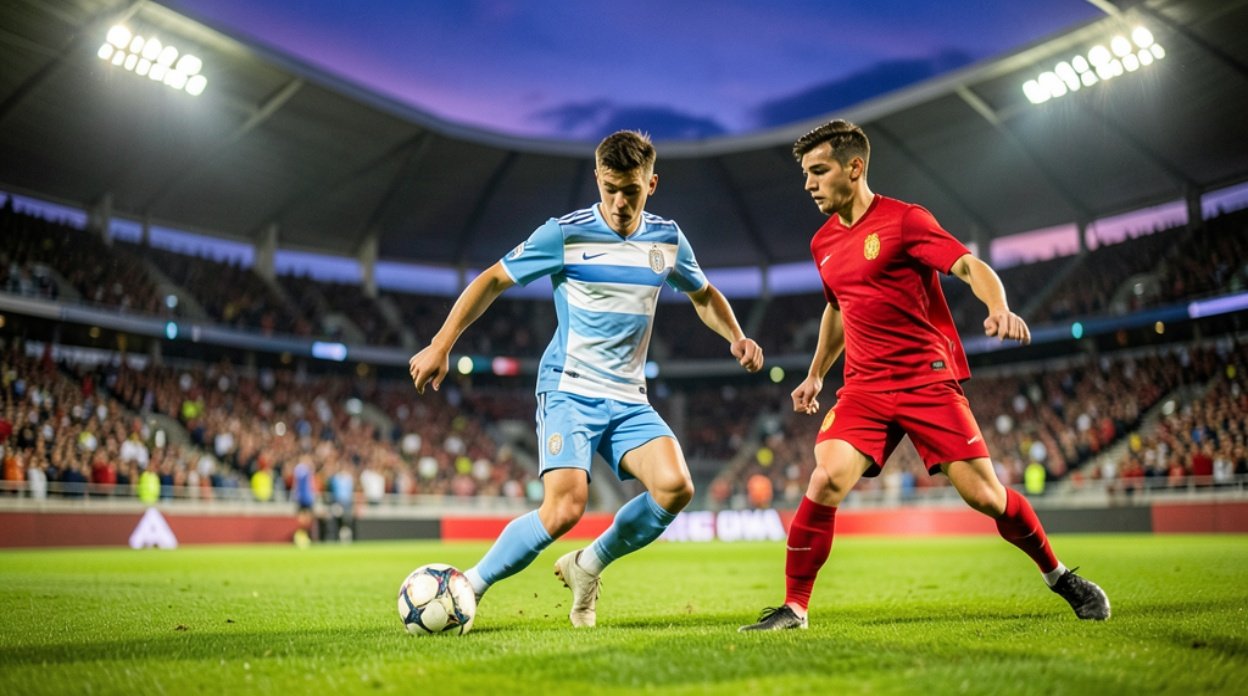
The global football season of 2026 marks an unprecedented watershed moment in sports history. As the grandest tournament on earth descends upon the vast, state-of-the-art arenas of Canada, Mexico, and the United States, we are not merely witnessing a battle for international supremacy. We are observing the twilight of an era—the final, bittersweet chapters of a golden generation of icons who have dominated the beautiful game for nearly two decades. The 2026 Soccer Summer legends are preparing for their absolute final bow on the international stage, transforming this North America 2026 showcase into a high-stakes, deeply emotional theater of footballing romanticism.
For players who have redefined tactical boundaries, shattered goalscoring records, and accumulated dozens of individual accolades, this summer tournament represents the ultimate quest for immortality. Yet, the physical demands of modern international football have never been more unforgiving. High-intensity pressing systems, transitional chaos, and the grueling travel schedules across multiple time zones in North America present unique challenges for these aging masters. This tactical and physical analysis explores how these living legends are adapting their game, how their national team managers are restructuring tactical systems to accommodate them, and what their final campaigns mean for the legacy of global football.
—
The Iconic Veterans: Who is Chasing Immortality?
To understand the magnitude of this tournament, one must look at the specific individuals who define this transitional era. These are not merely squad rotation players; they remain the spiritual, emotional, and tactical focal points of their respective nations. Here is how the most prominent veterans are preparing for their final campaign.
The Argentine Maestro: A Final Act for La Albiceleste’s Greatest
Having already secured his crowning achievement in Qatar, the legendary number ten of La Albiceleste enters the 2026 Soccer Summer with a different kind of pressure. No longer burdened by the desperate, agonizing need to validate his international career, he plays with a sense of liberated joy. However, do not mistake this for a mere exhibition tour. His competitive fire remains fiercely intact.
Tactically, his evolution is complete. He no longer occupies the right-half space with the explosive, direct dribbling bursts of his youth. Instead, he operates as a highly specialized “interpreter of space” or a deep-lying playmaker. By operating in the central pockets just behind a dynamic frontline, he dictates the tempo of the match, choosing his moments of acceleration with extreme calculation. La Albiceleste’s coaching staff has built a hyper-energetic midfield engine room around him—featuring relentless runners who cover his defensive vacuums—ensuring that when the maestro receives the ball, his vision and passing range remain completely lethal.
The Portuguese Phenomenon: Breaking Records in the Summer Tournament
For the iconic talisman of the Portuguese national team, the 2026 campaign is driven by an insatiable hunger to conquer new frontiers. Having spent his career defying the conventional physical limits of aging, his presence in North America is a testament to meticulous sports science, unparalleled self-discipline, and an unyielding elite mentality.
Unlike his Argentine counterpart, who drops deep to orchestrate play, the Portuguese forward has fully transitioned into an elite, highly specialized penalty-box predator. The days of him burning past fullbacks along the left flank are gone; instead, he relies on his peerless positional intelligence, elite movement in blind spots, and aerial dominance. The tactical challenge for the Portuguese side is balancing his lack of defensive pressing with the team’s need for structural compactness. When utilized as a focal point supported by elite, creative wingers who can feed him crosses and progressive passes, he remains one of the most dangerous finishers in the world, capable of turning any tight match with a single touch.
The Croatian Conductor: Masterclass of the Vatreni Midfield
Few players embody the concept of timeless elegance quite like the midfield general of The Vatreni. At an age when most midfielders have long since transitioned to coaching or retired to less demanding leagues, he continues to dictate the tempo of elite European and international matches. His final campaign in the 2026 Soccer Summer is a masterclass in spatial awareness and technical efficiency.
Croatia’s tactical identity is inextricably linked to his ability to resist high pressing, escape tight defensive traps, and deliver trivela passes that transition defense to attack in a fraction of a second. Because Croatia lacks the sheer depth of some of the larger European nations, his physical load management is a critical talking point. Expect to see him utilizing his vast experience to conserve energy during possession, relying on positional positioning rather than physical duels, and acting as the team’s on-field coach during critical tournament phases.
The Polish Marksman: Leading the White and Reds One Last Time
Poland’s greatest-ever striker enters the North America 2026 tournament carrying the immense hopes of his nation. As a traditional number nine whose game is built on physical strength, link-up play, and clinical execution, his final international campaign is a battle against isolated forward lines.
For Poland, the tactical key is ensuring their legendary captain is not left stranded against elite center-backs. Over the years, he has adapted by dropping deeper into the midfield to act as a target man, holding up the ball to allow rapid wingers to exploit space behind the opposition’s defensive line. His intelligence in drawing defenders out of position creates crucial opportunities for his teammates, making him an invaluable tactical asset even when he is not directly on the scoresheet.
—
Tactical Adaptations: How Managers Optimize Aging Icons
Accommodating a legendary veteran in a modern, elite football tournament is one of the most complex challenges a manager can face. The contemporary game is dominated by high-pressing structures, rapid counter-pressing transitions, and extreme physical workloads. To field a 38 or 40-year-old superstar without compromising the team’s defensive integrity requires sophisticated tactical engineering.
The “Rest Defense” and Defensive Workload Distribution
When a team fields a legendary attacker who is exempt from heavy defensive duties, the remaining outfield players must adjust their positioning to maintain structural stability. This is achieved through a highly coordinated “rest defense” (Restverteidigung). While the superstar hovers in spaces where they can exploit transitions, the midfield and defensive lines shift into asymmetrical shapes to close down potential counter-attacking lanes.
For instance, in a standard 4-3-3 formation, if the veteran forward does not track back, the defensive midfielder and the opposite wingers will tuck inside, effectively creating a compact mid-block that forces the opposition wide. This minimizes the space the opponent can exploit through the center, protecting the team from being overrun while preserving the energy of their key attacking weapon for when possession is regained.
Super-Sub Dynamics vs. Starting Eleven Management
Another critical tactical decision during the 2026 Soccer Summer is whether these icons should start matches or be utilized as high-impact substitutes. While historical status and player ego often dictate a starting role, the physical reality of a month-long tournament in high-heat environments makes the “super-sub” role highly attractive.
Bringing a player of world-class caliber off the bench against tired, structurally disorganized defenses in the 60th minute can be devastatingly effective. At that stage of the match, the game naturally stretches, pressing intensities drop, and the veteran’s superior decision-making, spatial awareness, and clinical finishing can decide the outcome of a match without exposing the team to 90 minutes of physical vulnerability.
—
Statistical Comparison: The Final Campaign Benchmarks
To understand how these legendary figures compare as they enter their final international tournament, we can analyze their projected roles, tactical metrics, and expected contributions during the North America 2026 tournament.
| Legendary Player | National Team | Primary Tactical Role | Key Metric to Watch | Projected Minutes per Match | Tactical Strength |
|---|---|---|---|---|---|
| The Argentine Maestro | La Albiceleste | Deep-Lying Playmaker / Space Interpreter | Expected Assists (xA) & Key Passes | 65 – 75 mins | Unrivaled vision, passing range, and set-piece delivery. |
| The Portuguese Phenomenon | Seleção das Quinas | Target Striker / Penalty Box Predator | Expected Goals (xG) & Aerial Duels Won | 70 – 80 mins | Elite movement, finishing, and physical conditioning. |
| The Croatian Conductor | The Vatreni | Tempo Regulator / Deep Midfielder | Progressive Passes & Press Resistance | 80 – 90 mins | Exceptional ball retention, trivela passes, and leadership. |
| The Polish Marksman | The White and Reds | Target Man / Focal Point Striker | Shot Conversion Rate & Touches in Box | 75 – 90 mins | Hold-up play, strength, and clinical finishing inside the area. |
—
Host Cities and Environmental Challenges: Humidity, Travel, and Recovery
The sheer geography of the North America 2026 tournament introduces physical variables that will heavily impact the performance of aging players. Unlike compact tournament settings of the past, teams in 2026 will face massive travel distances, varying altitudes, and wildly different climatic conditions.
Consider the contrast between playing a match in the high altitude of Mexico City, where the thin air severely tests cardiovascular endurance, and then flying to the intense, heavy humidity of Miami or Houston. For a 20-year-old athlete, the recovery cycle is relatively rapid; for a veteran in his late 30s or early 40s, these environmental shifts can lead to prolonged muscle fatigue, increased risk of soft-tissue injuries, and slower recovery times between group stage matches.
To combat this, national team medical staffs are employing cutting-edge sports science. This includes:
- Hyperbaric Oxygen Therapy (HBOT): To accelerate cellular repair and muscle recovery after high-intensity matches.
- Individualized Cryotherapy Protocols: Custom-tailored cold exposure times to reduce systemic inflammation.
- Micro-Travel Adjustments: Charter flights equipped with advanced compression gear, specialized sleep environments, and precise hydration monitoring to combat jet lag and travel fatigue.
- Rotational Squad Management: Managers utilizing their full squad depth to ensure their star veterans are rested during less critical group matches, saving their peak physical output for the knockout rounds.
—
The Legacy Impact: Inspiring the Next Generation of North American Soccer
Beyond the tactical setups and statistical breakdowns, the presence of these living legends during the 2026 Soccer Summer has an immeasurable cultural impact on the host nations. North America is experiencing an unprecedented soccer boom, and seeing these icons play their final competitive matches on local soil is fuel for the sport’s long-term growth.
For young players in the United States, Canada, and Mexico, watching how these veterans prepare, carry themselves, and execute under pressure is an invaluable masterclass. The legacy of this tournament will not just be recorded in the history books of the winning nation; it will be felt in the youth academies, the packed local pitches, and the surging popularity of domestic leagues across the continent for decades to come. This is the ultimate gift of the legends’ last dance: a passing of the torch to a new generation of players who will carry the sport forward.
—
FAQ
Are these legends expected to start every match in the 2026 tournament?
It is highly unlikely that every veteran player will start and play 90 minutes in every single match. Due to the high-tempo nature of modern football, intense heat, and heavy travel schedules across North America, managers will likely manage their minutes carefully. Some may start and be substituted around the 60-70 minute mark, while others might be deployed as highly tactical “super-subs” to influence the closing stages of critical games.
How does the climate of North America affect older players?
Older players are more susceptible to muscle fatigue and dehydration, which are exacerbated by high humidity (such as in Miami, Houston, or Atlanta) and high altitude (such as in Mexico City). National teams are using advanced sports science, personalized hydration plans, and localized training camps to help these veteran players adapt to the extreme environmental shifts.
Why is this tournament referred to as the “Last Dance” for these players?
Given that most of these legendary players are in their late 30s or early 40s, the 2026 Soccer Summer represents their final opportunity to represent their countries at the absolute highest level of international football. By the time the next major global tournament cycle arrives, these icons will have transitioned into retirement, making this summer the definitive end of a historic era.
How do teams compensate for the lower defensive work rate of aging superstars?
Managers typically employ a highly structured “rest defense” and use energetic, hard-working midfielders to cover the spaces left vacant by the veteran. By creating a compact defensive block and shifting dynamically, the team can absorb opposition pressure and quickly transition the ball to their star player in advantageous attacking positions.
Will the presence of these veterans hinder the development of younger players in their squads?
While some argue that playing veterans limits opportunities for younger talents, most tactical analysts and coaches believe the opposite. The mentorship, experience, and leadership these legends provide in high-pressure tournament situations are invaluable for the development of young players, who learn what it takes to perform at the absolute pinnacle of the sport.
“`
—
###
SECTION 3: IMAGE PROMPT
* **Scene:** A dramatic, cinematic wide-angle shot of an iconic veteran football player standing alone in the center circle of a massive, modern, packed North American stadium during the golden hour of sunset. The player is viewed from behind, wearing a generic light blue and white striped jersey with the number 10, looking out at the roaring, packed stands with dramatic sunbeams piercing through the stadium roof. The grass is pristine with visible mowing patterns. The atmosphere is filled with a sense of epic finality and emotional triumph.
* **Negative constraints:** “no official tournament logos, no official mascot, no team crests, no branded kits, no real player likenesses, no trademarked words, Summer 2026 Soccer, Summer 2026 Soccer, Copa America, MLS, adidas, Nike, Puma”.
—