
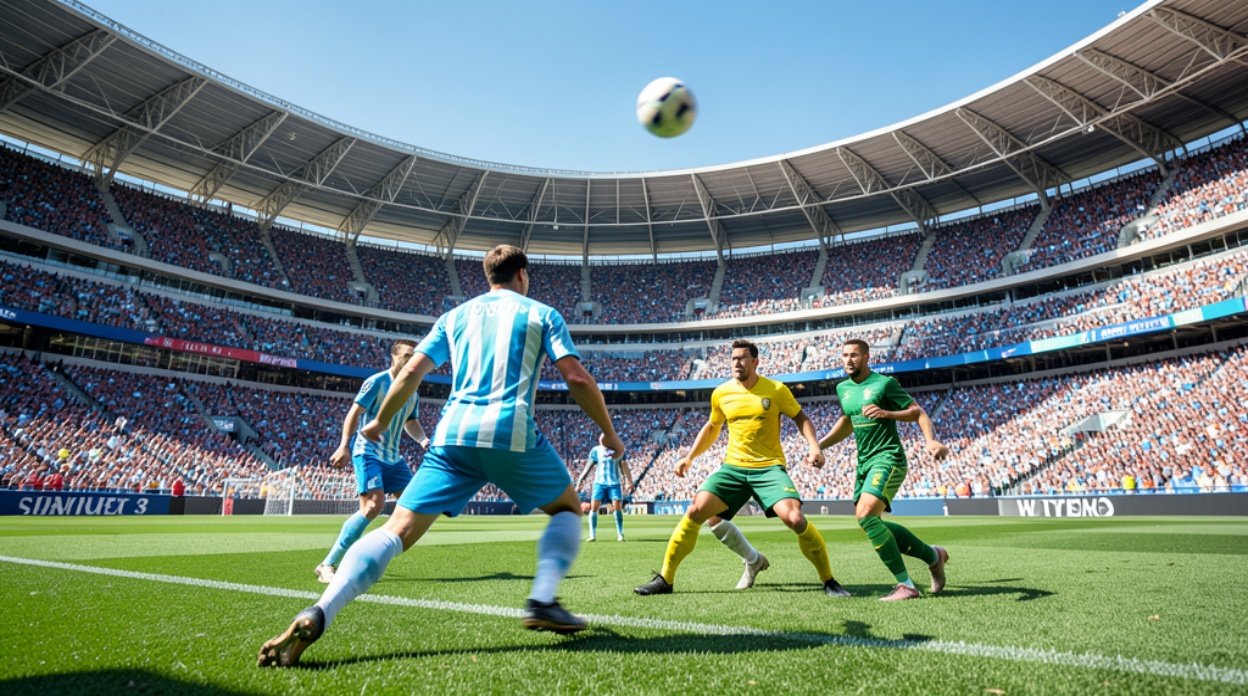
2026 Soccer Summer Predictions June 22: Tactical Analysis, Key Matchups, and Projected Outcomes
The grandest global football season is in full swing across North America, and June 22 promises to be one of the most thrilling matchdays of the entire summer tournament. As the group stages reach their critical midpoint, teams are desperate to secure their spots in the knockout rounds, while others fight tooth and nail to keep their tournament dreams alive. Today, we dive deep into three massive fixtures that showcase the tactical diversity, physical intensity, and sheer drama of this historic 2026 Soccer Summer.
Our comprehensive tactical analysis covers the highly anticipated clashes of the day: the South American masters of La Albiceleste taking on the resilient and physically imposing Socceroos; a high-octane intercontinental duel between the host nation’s Stars and Stripes and the technically brilliant Samurai Blue; and finally, a classic battle of European structure versus African dynamism as The Oranje go head-to-head with The Black Stars.
Match 1: La Albiceleste vs. The Socceroos (Group Stage Clash)
Team Form and Squad Dynamics: La Albiceleste
The reigning South American champions, La Albiceleste, enter this matchday as heavy favorites, not just for this game, but to lift the entire trophy in mid-July. Under their astute tactical leadership, they have evolved from a team heavily reliant on individual brilliance to a finely tuned, possession-based machine. Their midfield trio—renowned for its press-resistance, short passing circuits, and spatial awareness—dominates games by suffocating opponents in their own half. However, opening-match jitters showed that even the finest can be vulnerable to rapid counter-attacks if their rest-defense is not perfectly aligned.
With an aging but still lethal creative talisman operating in the half-spaces, La Albiceleste looks to exploit the spaces between the opposition’s midfield and defensive lines. The squad’s physical preparation for the humid North American summer has been meticulous, but squad rotation will be crucial to maintaining their high-tempo counter-pressing game.
Team Form and Squad Dynamics: The Socceroos
The Australian national team, affectionately known as The Socceroos, arrives at this fixture with a reputation for being one of the hardest-working, most physically robust sides in international football. They may lack the star-studded roster of their South American counterparts, but their collective organization, defensive discipline, and prowess from set-pieces make them a nightmare opponent in tournament football.
Coming off a resilient defensive display in their previous outing, The Socceroos will look to deploy a compact low-block, denying space behind their backline and forcing La Albiceleste into wide areas where their aerially dominant center-backs can clear the danger. Their transition play is direct, utilizing rapid wingers to stretch the pitch and win set-pieces, which remain their primary avenue for goalscoring.
Tactical Breakdown & Key Matchups
The tactical narrative of this match is a classic “attack versus defense” scenario, but with modern nuances. La Albiceleste will likely deploy an asymmetrical 4-3-3 that morphs into a 3-2-5 in possession. Their left-back will tuck in to form a back three, while the right-back pushes high to provide width, allowing their star playmaker to drift inside and create overloads in the central corridors.
To counter this, The Socceroos will set up in a rigid 4-5-1 or a 5-4-1 mid-to-low block. The key matchup to watch will be Australia’s defensive midfielder tasked with shadowing the Argentine creative hub. If the Australian midfield pivot can disrupt the passing lanes into the “zone 14” area, they can frustrate the South Americans. Conversely, if La Albiceleste can trigger quick wall-passes and third-man runs, they will pierce the Australian low-block early.
- Key Player Duel: Rodrigo De Paul (La Albiceleste) vs. Jackson Irvine (The Socceroos) – A battle of pure work rate, tactical fouling, and midfield dominance.
- Tactical X-Factor: The timing of Argentina’s counter-press. If it fails, Australia’s direct long balls to their target man could expose a high defensive line.
Score Prediction & Betting Angles
While The Socceroos will fight valiantly and likely keep the scoreline respectable in the first half through sheer physical exertion, the technical superiority and depth of La Albiceleste should ultimately prevail as the game wears on. Expect the South Americans to break the deadlock around the hour mark before sealing the game late.
Predicted Winner: La Albiceleste (2-0)
Match 2: The Stars and Stripes vs. The Samurai Blue (A High-Octane Intercontinental Duel)
Team Form and Squad Dynamics: The Stars and Stripes
As one of the proud host nations of this 2026 Soccer Summer, The Stars and Stripes carry the immense weight of home expectations. Boasting their most talented generation in history, they play an aggressive, high-pressing, and physically demanding style of football designed to feed off the energy of the massive home crowds. Their squad is packed with athletic wingers playing at the highest levels of European football, supported by a dynamic, box-to-box midfield engine room.
However, pressure can be a double-edged sword. In their warm-up fixtures and early group matches, defensive lapses in concentration and a tendency to overcommit in transition have cost them. Against a team as tactically disciplined and clinical as Japan, any structural instability will be ruthlessly exploited.
Team Form and Squad Dynamics: The Samurai Blue
The Samurai Blue enter this matchday as one of the most tactically intriguing teams in the global football season. Renowned for their incredible technical proficiency, rapid transition play, and flawless collective coordination, the Asian powerhouses are capable of matching any side in the world on their day. Their squad features a perfect blend of experienced European league veterans and hungry domestic talents.
Japan’s approach is highly adaptable; they are equally comfortable dominating possession with intricate triangle passing patterns or sitting in a disciplined mid-block and launching devastating counter-attacks using the blistering pace of their wide forwards. Their stamina and mental resilience make them exceptionally dangerous in the final 15 minutes of matches.
Tactical Breakdown & Key Matchups
This match promises to be a tactical chess match played at 100 miles per hour. The Stars and Stripes will look to establish physical dominance early, utilizing a high gegenpress to win the ball back in Japan’s defensive third. Their fullbacks will bomb forward, aiming to isolate Japan’s wingers in defensive duties.
However, The Samurai Blue are masters at playing through the press. Using short, crisp, one-touch combinations, they will look to bypass the initial press of the North Americans and exploit the massive space left behind the advancing fullbacks. The battle in the half-spaces will be critical. Japan’s attacking midfielders excel at drifting between the lines, which will force the host nation’s central defenders into difficult decisions: step up and leave space behind, or drop off and allow time on the ball.
- Key Player Duel: Antonee Robinson (The Stars and Stripes) vs. Takefusa Kubo (The Samurai Blue) – A blistering battle of pace, defensive recovery, and creative output down the flank.
- Tactical X-Factor: Midfield turnovers. Whichever team turns the ball over in their own half will likely concede, as both sides possess elite transitional speed.
Score Prediction & Betting Angles
This is the hardest match of the day to call. The home advantage and physical power of The Stars and Stripes will give them periods of utter dominance, but the technical efficiency and tactical discipline of The Samurai Blue make them incredibly difficult to break down. A high-scoring, entertaining draw seems highly probable, with both teams finding the back of the net.
Predicted Winner: Draw (2-2)
Match 3: The Oranje vs. The Black Stars (A Battle of Physicality and Tactical Nuance)
Team Form and Squad Dynamics: The Oranje
Under their experienced tactical mastermind, The Oranje have adopted a highly structured, pragmatic, yet devastatingly efficient style of play. Moving away from the traditional, rigid 4-3-3 of Dutch folklore, they now frequently utilize a fluid 3-4-2-1 or 3-5-2 system that prioritizes defensive solidity, wingback progression, and verticality in possession. Their backline is arguably one of the most formidable in the tournament, marshaled by elite, world-class central defenders who excel in both 1v1 duels and ball distribution.
The Dutch have shown remarkable consistency leading up to the 2026 Soccer Summer, utilizing their wingbacks to stretch opponents and creating central overloads that allow their dynamic striking duo to exploit defensive gaps. Their ability to control the tempo of the game will be their primary weapon against a highly energetic opponent.
Team Form and Squad Dynamics: The Black Stars
The African representatives, The Black Stars, arrive at this matchday with an incredibly exciting, youthful squad brimming with explosive pace, raw power, and unpredictable flair. Historically one of the giants of African football, this modern iteration of the team thrives in chaotic, high-tempo environments where their individual athletic superiority can shine.
While they possess some of the most exciting young attacking talent in the global football season, their Achilles’ heel remains defensive organization and concentration during sustained periods of opposition possession. If they can remain disciplined without the ball and transition with direct, vertical passes to their rapid forwards, they can cause a massive upset in North America.
Tactical Breakdown & Key Matchups
Tactically, The Oranje will seek to put a lid on the game, controlling the rhythm through their three ball-playing center-backs and a double-pivot midfield. By keeping possession and circulating the ball side-to-side, they aim to tire out the energetic Ghanaian midfield and lure them out of their defensive positions.
For The Black Stars, the key to success lies in isolating the Dutch outer center-backs in 1v1 situations during transitions. If Ghana can win the second balls in midfield and immediately feed their wingers, they can bypass the solid Dutch structure before it has time to settle. However, if they allow the Dutch wingbacks to pin them back into a deep 5-4-1, they will struggle to find an outlet when they regain possession.
- Key Player Duel: Virgil van Dijk (The Oranje) vs. Inaki Williams (The Black Stars) – A colossal battle of strength, intelligence, and elite recovery pace in the defensive third.
- Tactical X-Factor: Set-piece delivery. The Dutch possess immense height and organization on set-plays, which could prove to be the tiebreaker against a sometimes disorganized Ghanaian zonal marking system.
Score Prediction & Betting Angles
The Black Stars will undoubtedly provide a stern physical test and create a few heart-in-mouth moments on the counter-attack. However, the tactical discipline, defensive steel, and set-piece superiority of The Oranje should see them control the game’s key phases and secure a hard-fought victory.
Predicted Winner: The Oranje (2-1)
Comparative Statistical Overview
To help you visualize how these teams stack up for the June 22 fixtures, we have compiled a detailed tactical and statistical matrix based on their recent performances in international play and early tournament data.
| Fixture | Predicted Possession (%) | Expected Goals (xG) Projection | Key Tactical Battleground | Projected Winner |
|---|---|---|---|---|
| La Albiceleste vs. The Socceroos | 68% – 32% | 2.15 vs. 0.45 | Argentina’s half-space rotation vs. Australia’s low-block discipline | La Albiceleste |
| The Stars and Stripes vs. The Samurai Blue | 48% – 52% | 1.65 vs. 1.70 | US high-press recovery vs. Japan’s rapid transitional passing | Draw |
| The Oranje vs. The Black Stars | 58% – 42% | 1.85 vs. 1.10 | Dutch wingback progression vs. Ghana’s explosive counter-attacks | The Oranje |
Key Factors Influencing Today’s Matches
When making predictions for this crucial matchday of the 2026 Soccer Summer, several external and squad-specific variables must be taken into account. These factors often play a larger role in tournament football than pure tactical setups.
1. Climate and Travel Fatigue
The sheer geographical scale of the North American host cities means teams are subjected to varying climates and extensive travel. A team playing in the humid southern regions of the United States will face vastly different physical demands than one playing in cooler, high-altitude venues. Squads with superior depth and highly scientific recovery protocols will naturally hold a massive advantage as the tournament progresses.
2. Squad Depth and the Five-Substitute Rule
In the modern global football season, matches are rarely decided by the starting eleven alone. The ability to make five tactical substitutions allows managers to completely alter their tactical systems or refresh their pressing units in the second half. Teams like La Albiceleste and The Oranje possess deep benches filled with game-changers, whereas sides with less squad depth may see their performance levels drop drastically after the 70th minute.
3. The Psychological Pressure of Co-Hosting
For The Stars and Stripes, playing in front of passionate, sold-out home crowds is a massive boost, but it also introduces immense psychological pressure. Early mistakes can lead to anxiety transmitting from the stands to the pitch. How the coaching staff manages the emotional state of their young squad will be just as important as their tactical instructions on the whiteboard.
FAQ
Who are the favorites to win on June 22 in the 2026 Soccer Summer?
The heavy favorites for the June 22 matchday are La Albiceleste (against Australia) and The Oranje (against Ghana). The clash between The Stars and Stripes and The Samurai Blue is highly competitive and widely regarded by tactical analysts as a potential draw or a closely contested, high-scoring affair.
Where can I watch the June 22 matches of the North America 2026 tournament?
Matches are broadcast globally across major sports networks. In North America, primary sports broadcasters hold the rights, while international fans can tune in via their respective national sports networks and official streaming partners of the 2026 Summer Tournament.
How does the climate in North America affect the tactical setups of these teams?
The intense summer heat and humidity in several host cities force teams to adapt their pressing intensities. High-pressing teams like The Stars and Stripes must be selective about when they trigger their press to avoid premature physical exhaustion. Possession-based teams like La Albiceleste often benefit, as keeping the ball forces their opponents to do the physically exhausting work of chasing in the heat.
Why is the match between USA and Japan considered a tactical highlight?
This matchup features two contrasting yet modern styles of football. The US relies on high physical output, athletic wingers, and aggressive pressing, while Japan represents the pinnacle of technical discipline, collective organization, and rapid, short-passing transition play. It is a true test of physical power versus technical efficiency.
Are there any major suspension or injury concerns for the teams playing today?
While official starting lineups are released one hour before kickoff, sports journalists closely monitor squad rotation. Both La Albiceleste and The Oranje are expected to make minor rotations in their midfields to preserve their key players’ fitness for the knockout stages, while The Stars and Stripes are expected to field their absolute strongest starting eleven to secure qualification on home soil.
Can the Socceroos pull off an upset against La Albiceleste?
While an outright win is highly unlikely given the massive disparity in technical quality, a draw is not entirely out of the question if Australia can execute a flawless low-block defensive game plan. They will need to remain perfectly compact, avoid individual errors, and capitalize on a set-piece or counter-attack while hoping the South Americans have an off-day in front of goal.