
“`html
Historic Upset: Norway Stuns Brazil in Global Football Spectacle
In a moment that will forever be etched into the annals of football history, the Scandinavian Lions of Norway delivered one of the most astonishing upsets in the history of the premier quadrennial international championship. Facing the mighty La Canarinha of Brazil, a nation synonymous with footballing supremacy, Norway defied all odds, securing a victory that sent shockwaves across the globe. This wasn’t just a win; it was a statement, a tactical masterclass, and a testament to the indomitable spirit of an underdog seizing their moment on the grandest stage. The result, a stunning triumph for the Northern European side, saw the South American giants unceremoniously dumped out of the competition, largely thanks to the phenomenal individual brilliance and collective effort spearheaded by their talismanic striker, Erling Haaland.
The pre-tournament discussions had largely revolved around Brazil’s seemingly unassailable squad depth, their star-studded attack led by the likes of Neymar, and their historical pedigree. Few, if any, pundits or fans had given Norway more than an outside chance of even progressing beyond the group stages, let alone confronting and conquering one of the perennial favorites. Yet, on that fateful evening, under the dazzling lights of a packed stadium, Norway orchestrated a performance for the ages, proving once again that in football, reputation and past glories count for little when faced with tactical discipline, unwavering belief, and a generational talent like Haaland.
The Unfolding Narrative: A Clash of Eras and Ambitions
The build-up to this particular fixture was laden with contrasting narratives. On one side stood Brazil, a titan of the sport, boasting more triumphs in global football spectacles than any other nation. Their squad was a dazzling array of technical maestros, speed demons, and creative geniuses, meticulously assembled to reclaim their position at the very pinnacle of the international game. Their journey to this stage had been characterized by fluid attacking play, moments of individual brilliance, and a swagger that only a team of their caliber could exude. The weight of expectation from a football-mad nation rested heavily on their shoulders, with every pass, every dribble, and every shot scrutinized for perfection.
Brazil’s Legacy and Unyielding Expectations
For decades, Brazil has not just played football; they have defined it. The very mention of “La Canarinha” evokes images of samba flair, mesmerizing dribbles, and goals scored with an artistic flourish. This particular iteration of the Seleção was no different, featuring a blend of seasoned veterans and prodigious young talents, all united by the common goal of adding another star to their emblem. Their attacking trident, featuring the mercurial Neymar, had been tearing through defenses, displaying a synergy and potency that seemed unstoppable. The defensive solidity, often an area of concern for historically attack-minded Brazilian teams, had also seen considerable improvement, making them appear a truly complete unit. The global press had largely earmarked them as strong contenders, with many predicting a deep run into the knockout stages, if not outright victory. Their fans, passionate and demanding, had travelled in their thousands, creating a vibrant atmosphere wherever their team played, their chants and drums echoing with unwavering belief in their team’s destiny.
The pressure on Brazil’s players was immense, a unique burden that comes with representing a nation where football is not merely a sport, but a way of life, a cultural cornerstone. Every training session, every pre-match interview, and certainly every minute on the pitch was under an intense spotlight. The narratives of redemption for past disappointments, the desire to cement their place in history, and the sheer talent at their disposal all combined to create an aura of almost inevitable success. Their journey through the group stages and early knockout rounds had been impressive, marked by dominant performances and a clear statement of intent, reinforcing the belief that this was indeed their year.
Norway’s Ascent and the Rise of a Golden Generation
In stark contrast, Norway arrived at the global football spectacle as relative outsiders, albeit with a growing reputation. Their history in such grand tournaments had been sporadic, often characterized by spirited but ultimately short-lived campaigns. However, a new generation of talent had emerged, spearheaded by two truly world-class players: the prolific goal-scorer Erling Haaland and the midfield maestro Martin Ødegaard. This generation had slowly but surely transformed the national team, instilling a new sense of belief and a more sophisticated tactical approach under the guidance of a shrewd coaching staff. Their qualification journey had been arduous, showcasing resilience, tactical discipline, and the explosive power of their key players.
The Scandinavian Lions’ strength lay not just in individual brilliance, but in their cohesive team play, defensive organization, and the clinical efficiency of their counter-attacks. They were a team that understood their strengths and limitations, playing with a pragmatic yet effective style that could frustrate even the most free-flowing opponents. While they lacked the historical pedigree and the sheer star power of Brazil, they compensated with an unyielding work ethic, tactical intelligence, and a hunger to prove themselves on the biggest stage. For many, simply reaching the knockout stages was considered a triumph for Norway, a testament to their progress. Little did the world know, they were preparing to write an entirely new chapter in their footballing narrative, one that would redefine perceptions and inspire future generations.
Their journey through the tournament had been a gradual ascent, building confidence with each passing match. They had navigated tough group stage encounters, displaying both defensive solidity and flashes of offensive brilliance, often ignited by Haaland’s predatory instincts. Their quarter-final victory had been hard-fought, showcasing their mental fortitude under pressure. This match against Brazil, however, was seen as the ultimate litmus test, a challenge that many believed would be a bridge too far for the Northern European side. The stage was set for a classic David vs. Goliath encounter, but few could have predicted just how dramatically the script would be flipped.
The Epic Encounter: A Blow-by-Blow Account of a Legendary Battle
The atmosphere inside the stadium was electric, a cacophony of vibrant yellow and green intermingled with pockets of determined red, white, and blue. The tension was palpable, a stark contrast to the pre-match predictions that largely favored a comfortable victory for Brazil. From the first whistle, however, it became clear that Norway was not there merely to make up the numbers; they were there to compete, to challenge, and ultimately, to conquer.
Pre-Match Intensity and Opening Gambits
As the teams emerged onto the pitch, the roar of the crowd was deafening. Brazil, in their iconic yellow shirts, exuded confidence, their star players exchanging knowing glances. Norway, clad in their traditional red, appeared focused, perhaps a touch nervous, but undeniably resolute. The opening minutes of the match saw Brazil predictably dominate possession, their midfielders orchestrating intricate passing moves, probing Norway’s defensive lines. The South American giants attempted to stamp their authority early, with quick exchanges and dazzling individual runs from their wide players, testing the Scandinavian backline’ with early crosses and shots from range. The iconic number 10, Neymar, was particularly active in these initial exchanges, dropping deep to link play and attempting to weave his magic in congested areas. Norway, however, remained disciplined, absorbing the pressure with a compact 4-4-2 formation, denying space in crucial areas and forcing Brazil to play wide or attempt speculative long shots.
The early exchanges were a testament to Norway’s meticulous preparation. Their defensive shape was almost impenetrable, a well-drilled unit moving in sync, anticipating Brazil’s intricate passes and closing down potential threats with precision. Midfielders like Martin Ødegaard were crucial in tracking back, breaking up play, and initiating quick transitions. The strategy was clear: frustrate Brazil, minimize their clear-cut chances, and wait for opportunities to strike on the counter. Brazil’s initial frustration became evident as their usual free-flowing football struggled to break through the organized Norwegian defense, leading to a few mistimed passes and ambitious attempts from distance that sailed wide or were comfortably collected by the Norwegian goalkeeper.
The Haaland Factor: A Moment of Clinical Brilliance
As the first half wore on, Norway’s confidence grew. They began to venture forward with more intent, albeit cautiously. Then, in the 32nd minute, the moment arrived that would send the Norwegian faithful into delirium and silence the majority of the stadium. A swift counter-attack, initiated by a perfectly timed interception in midfield, saw Ødegaard spray a sublime pass down the right flank. The Norwegian winger raced clear, delivering a pinpoint cross into the heart of the Brazilian penalty area. There, lurking with his characteristic anticipation and predatory instinct, was Erling Haaland. He rose majestically above the Brazilian defenders, connecting with the ball with immense power and precision, heading it past the despairing dive of the Brazilian goalkeeper. The net rippled, and for a split second, the stadium was stunned into silence before the roar from the Norwegian section erupted. It was 1-0 to Norway, a lead that felt monumental against such formidable opposition.
Haaland’s goal was not just a testament to his aerial prowess; it was a demonstration of his exceptional movement and ability to find pockets of space amidst the tightest defenses. His timing was impeccable, his leap powerful, and the finish clinical. The goal instantly changed the complexion of the match, shifting the psychological advantage firmly in Norway’s favor. Brazil, suddenly trailing, looked visibly shaken. Their intricate passing became more frantic, their attempts to equalize lacking the usual composure. Neymar, in particular, began to show signs of frustration, attempting audacious dribbles and shots that often came to naught, highlighting Norway’s successful strategy of stifling his influence.
Brazil’s Mounting Frustration and Norway’s Resilience
The second half saw Brazil emerge with renewed urgency, pouring forward in waves, desperate to find an equalizer. Their coach made tactical adjustments, bringing on more attacking players to increase the pressure. Shot after shot rained down on the Norwegian goal, but each attempt was either blocked by a courageous defender, saved by the inspired Norwegian goalkeeper, or flew just wide of the post. The Brazilian attacking maestro, Neymar, tried everything in his repertoire – audacious flicks, driving runs, and incisive passes – but found himself repeatedly thwarted by Norway’s compact defense and disciplined marking. His frustration grew with every unsuccessful attempt, culminating in a yellow card for a dissent towards the referee.
Norway, meanwhile, continued to execute their game plan with remarkable discipline. They defended deep, forming an almost impenetrable barrier, and whenever they won possession, they looked to release Haaland or exploit space on the flanks. Their defensive midfielders were tireless, constantly disrupting Brazil’s rhythm and preventing them from settling into their intricate passing patterns. The intensity of their defending was matched only by their collective determination, as every player fought for every inch of the pitch. The sight of Norwegian defenders throwing their bodies in front of shots, and the goalkeeper making a string of crucial saves, only added to the growing narrative of an impending upset.
The Decisive Blows: Sealing a Historic Victory
As Brazil pushed higher and higher, committing more players forward, they inevitably left themselves exposed at the back. In the 78th minute, Norway capitalized again. Another rapid counter-attack, originating from a cleared Brazilian corner, saw Haaland burst through the center. With two Brazilian defenders scrambling to catch him, he showed incredible composure, shielding the ball, drawing the goalkeeper out, and then slotting it coolly into the bottom corner. It was a goal that encapsulated his brilliance – pace, power, and clinical finishing. The stadium erupted in a mixture of disbelief and awe, as Norway now led 2-0.
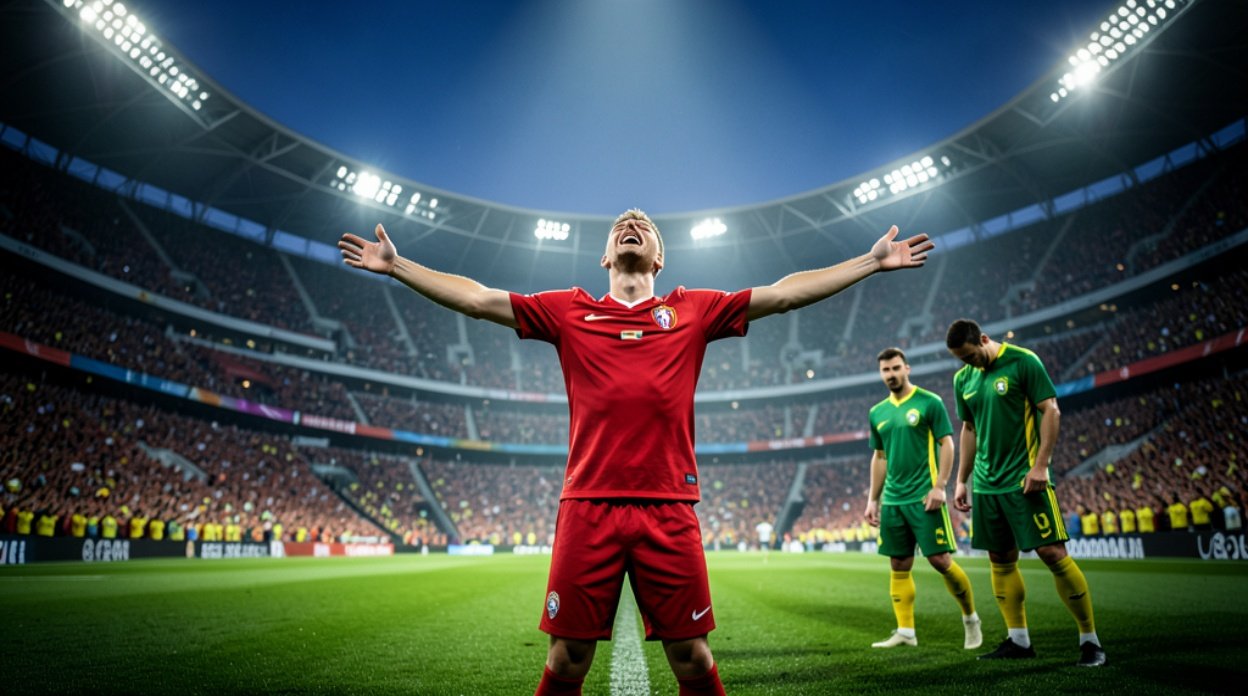
This second goal was a dagger to the heart of Brazil’s hopes. The energy seemed to drain from their players, their shoulders slumped. Despite a late surge and a few more desperate attempts, Brazil could not find a way past the resolute Norwegian defense. The final whistle blew, confirming one of the most incredible results in the history of the international championship. Norway had not just won; they had comprehensively outmaneuvered and outfought one of football’s traditional superpowers. The image of Haaland celebrating with his teammates, while Brazil’s stars, including Neymar, stood dejected, was a stark reminder of the beautiful, unpredictable nature of football.
Tactical Masterclass: How Norway Engineered the Improbable
Norway’s victory was no fluke; it was the result of a meticulously crafted tactical plan executed with near-perfection. The coaching staff had clearly analyzed Brazil’s strengths and weaknesses, devising a strategy that neutralized the South American giants’ attacking prowess while simultaneously exploiting their defensive vulnerabilities.
Norway’s Defensive Solidity and Counter-Attacking Prowess
- Compact Defensive Lines: Norway deployed a deep, compact 4-4-2 formation, often transitioning to a 4-5-1 when Brazil had sustained possession. This denied Brazil space between the lines, forcing them wide and limiting the effectiveness of their creative midfielders and forwards who thrive in tight central areas. The two banks of four were incredibly disciplined, moving in unison to close down passing lanes and restrict options for Brazil’s ball carriers.
- Disciplined Pressing Triggers: While defending deep, Norway also utilized intelligent pressing triggers. Instead of a high, energy-sapping press, they waited for Brazil to enter specific zones on the pitch, particularly around the halfway line, before initiating a coordinated press. This often led to turnovers in midfield, allowing Norway to transition quickly from defense to attack.
- Exploiting Brazil’s High Line: Brazil, known for their attacking philosophy, often played with a relatively high defensive line, particularly when chasing a goal. Norway expertly exploited this with direct, incisive passes over the top or through the channels, aiming for the blistering pace and strength of Erling Haaland. His ability to hold off defenders and run onto through balls was a constant threat.
- Clinical Finishing: When opportunities arose, Norway was ruthlessly efficient. Both of Haaland’s goals were instances of clinical finishing, demonstrating the importance of taking chances against top-tier opposition, especially when those chances are few and far between.
The success of Norway’s defensive strategy was evident in how frustrated Brazil became. The Seleção struggled to create clear-cut chances, often resorting to speculative shots from outside the box or hopeful crosses into a crowded penalty area. The collective effort of the Norwegian defense, from the goalkeeper to the wingers tracking back, was exemplary.
Brazil’s Tactical Shortcomings and Over-Reliance
- Over-Reliance on Individual Brilliance: While Brazil boasts an abundance of individual talent, their strategy seemed to overly depend on moments of individual magic, particularly from Neymar. When Norway effectively neutralized these individual threats through tight marking and collective defensive effort, Brazil struggled to find a cohesive Plan B. There was a noticeable lack of intricate team movements or pre-planned attacking patterns to break down a deep-lying defense.
- Lack of Collective Defensive Effort: When committing players forward, Brazil’s defensive transitions were sometimes slow, leaving their backline exposed to Norway’s quick counter-attacks. There was a perceived lack of collective defensive responsibility, with some attacking players not tracking back effectively, which Haaland and his teammates ruthlessly exploited.
- Predictable Attack Patterns: For all their flair, Brazil’s attacking patterns became somewhat predictable against Norway’s disciplined defense. They often looked to play through the center or cut in from the flanks, but Norway’s compact lines and disciplined marking meant these avenues were consistently blocked. A lack of variation in their attacking approach allowed Norway to anticipate and counter their moves.
- Vulnerability to Counter-Attacks: As Brazil pushed more players forward in search of an equalizer, they left significant gaps in their defense. Norway’s ability to quickly win possession and launch direct attacks exposed this vulnerability, ultimately leading to Haaland’s decisive second goal.
The coaching decisions also played a pivotal role. Norway’s manager stuck to his game plan, making tactical substitutions that reinforced their defensive structure and maintained their counter-attacking threat. In contrast, Brazil’s manager, despite bringing on more attacking players, seemed unable to unlock the Norwegian defense, and his team’s frustrations grew with each passing minute, leading to a breakdown in their usual composure and tactical discipline.
Star Performers and Unsung Heroes: Defining Moments
While the headlines naturally gravitated towards the goal-scoring heroics, Norway’s victory was a collective effort, peppered with standout performances across the pitch. Each player contributed to a truly historic upset.
Erling Haaland: The Irresistible Force
Without question, Erling Haaland was the undisputed Man of the Match. His two goals were not merely strikes; they were moments of pure, unadulterated predatory instinct and world-class finishing. Beyond the goals, his overall contribution was immense. He was a constant outlet for Norway’s defense, holding up the ball under immense pressure, linking play with his midfielders, and drawing defenders out of position. His physical presence was overwhelming, allowing Norway to bypass Brazil’s midfield press and launch direct attacks. Haaland’s work rate was also exceptional; he pressed defenders when needed and tracked back to contribute to the defensive effort, showcasing a complete performance that belied his young age. His psychological impact on both teams was palpable – inspiring his teammates and demoralizing Brazil’s defense.
Martin Ødegaard: The Midfield Maestro
While Haaland provided the cutting edge, Martin Ødegaard was the orchestrator in Norway’s midfield. His vision, passing range, and intelligence were crucial in transitioning from defense to attack. He was responsible for the assist for Haaland’s first goal, a perfectly weighted pass that tore open Brazil’s defense. Throughout the match, Ødegaard dictated the tempo for Norway, knowing when to slow the play down and when to unleash a quick counter. Defensively, he was equally diligent, tracking back tirelessly to support his full-backs and breaking up Brazil’s intricate passing moves. His leadership and composure under pressure were vital in maintaining Norway’s tactical discipline throughout the 90 minutes.
Norway’s Defensive Backbone: Goalkeeper and Key Defenders
The entire Norwegian defensive unit deserves immense credit. The goalkeeper made a string of crucial saves, including a spectacular stop from a powerful long-range effort in the first half and several commanding claims from crosses under pressure. The central defensive partnership was resolute, winning aerial duels, making vital blocks, and positioning themselves perfectly to thwart Brazil’s attacks. The full-backs were equally impressive, balancing their defensive duties with timely runs forward, and crucially, tracking back tirelessly to nullify Brazil’s dangerous wingers. Their collective effort transformed Norway’s penalty area into an impenetrable fortress.
Neymar and Brazil’s Star Players: A Frustrating Evening
For Brazil, it was an evening of immense frustration, particularly for their iconic number 10, Neymar. While he showed glimpses of his prodigious talent, his attempts to break down Norway’s defense were consistently thwarted. He was tightly marked, often double-teamed, and found little space to operate in his preferred areas. His frustration grew throughout the match, leading to a few uncharacteristic errors and a booking. Other key Brazilian attackers also struggled to make a significant impact, their intricate passing game unable to penetrate Norway’s disciplined lines. The midfield, usually so influential, found themselves outmaneuvered in the tactical battle, unable to provide the necessary service to their forwards or adequately protect their defense from Norway’s swift counters. The collective performance of Brazil’s star players fell short of the lofty expectations, highlighting the importance of team cohesion over individual brilliance against a well-drilled opponent.
Aftermath and Global Reverberations: A New Chapter in Football History
The final whistle was met with an explosion of joy from the Norwegian contingent and stunned silence from the Brazilian faithful. The implications of this result stretched far beyond the confines of the stadium, echoing across continents and sparking debates among football enthusiasts worldwide.
Norway’s Triumph: A Nation’s Pride and a Path Forward
For Norway, this victory was nothing short of historic. It represented the culmination of years of hard work, investment in youth development, and a growing belief in their footballing potential. The scenes of celebration, both on the pitch and back home in Scandinavia, were emotional and profound. It was a moment of immense national pride, validating the efforts of a generation of players and coaches. This victory propelled Norway into the semi-finals of the international championship, a feat previously considered unimaginable for the Northern European nation. It provided a massive confidence boost, transforming them from plucky underdogs into genuine contenders, albeit still with a mountain to climb. The team’s tactical blueprint and the leadership of players like Haaland and Ødegaard became a source of inspiration for future generations of Norwegian footballers.
The narrative surrounding Norway shifted overnight. They were no longer just a team with a couple of star players; they were a formidable collective, capable of competing with and defeating the very best. This monumental win not only secured their place in the next round but also cemented their status as a rising power in global football, proving that with the right strategy, dedication, and a bit of generational talent, anything is possible.
Brazil’s Exit: Introspection, Disappointment, and Future Implications
For Brazil, the defeat was a bitter pill to swallow, a devastating blow to their aspirations of international glory. The immediate aftermath was characterized by profound disappointment, tears from players and fans alike, and a period of intense introspection. The question of “what went wrong?” would dominate national discourse for months, if not years. Critics pointed to an over-reliance on individual brilliance, a lack of tactical flexibility, and defensive vulnerabilities that had been exposed by a disciplined opponent. The elimination sparked widespread calls for a complete overhaul of their footballing philosophy and a re-evaluation of their coaching staff and player selection.
The implications for Brazilian football were significant. It served as a stark reminder that even the most decorated nations must continually adapt and evolve to remain competitive in the modern game. The pressure to bounce back stronger in subsequent tournaments would be immense, as the nation grappled with the reality of another early exit from a major international championship. The defeat underscored the ever-increasing competitiveness of global football, where tactical acumen and collective effort can overcome even the most star-studded lineups.
Historical Context: A New Entry in the Annals of Upsets
This result immediately took its place among the pantheon of legendary upsets in football history. It echoed moments like the “Miracle on Ice” in hockey or other unexpected victories in major sporting events. It served as a powerful reminder of the beautiful unpredictability of football, where passion, strategy, and sheer will can triumph over perceived superiority and historical dominance. Such upsets are crucial for the sport, as they keep fans engaged, foster belief in smaller nations, and prove that the game is truly global, not just the domain of a select few traditional powerhouses.
The impact on the global football narrative was profound. It challenged conventional wisdom, forced pundits to re-evaluate their assumptions, and reignited the debate about the balance between individual talent and collective strategy. Norway’s triumph against Brazil became a symbol of hope for every underdog team around the world, proving that with meticulous preparation and an unwavering belief, even the most insurmountable obstacles can be overcome.
Statistical Deep Dive: The Numbers Behind the Narrative
While the emotional impact of Norway’s victory was immense, the statistics also tell a compelling story of tactical efficiency and defensive resilience versus attacking dominance that failed to convert into goals. Here’s a breakdown of key match statistics:
| Statistic | Brazil | Norway |
|---|---|---|
| Possession | 68% | 32% |
| Total Shots | 21 | 7 |
| Shots on Target | 6 | 4 |
| Goals | 0 | 2 |
| Pass Accuracy | 89% | 75% |
| Corners | 10 | 2 |
| Fouls Committed | 14 | 18 |
| Yellow Cards | 2 | 3 |
| Offsides | 1 | 4 |
| Saves by Goalkeeper | 2 | 6 |
| Clearances | 12 | 35 |
These statistics vividly illustrate Norway’s approach: allowing Brazil to dominate possession, absorbing pressure, and then striking with surgical precision when opportunities arose. Brazil’s high number of shots and corners reflect their attacking intent, but the low conversion rate and Norway’s high number of saves and clearances underscore the effectiveness of the Scandinavian side’s defensive masterclass. The disparity in “Goals” despite the “Possession” and “Total Shots” figures perfectly encapsulates the essence of this historic upset, where efficiency trumped sheer volume.
Fan Reactions and Media Frenzy: A World in Disbelief
The immediate aftermath of Norway’s victory over Brazil triggered an unprecedented wave of reactions across social media, sports news outlets, and fan communities worldwide. The sheer magnitude of the upset ensured that it became the dominant topic of conversation, overshadowing all other footballing news.
Global Shockwaves and Social Media Storm
Within moments of the final whistle, the internet exploded. Hashtags related to Norway, Haaland, and the monumental upset trended globally. Social media platforms were awash with expressions of disbelief, awe, and celebration. Fans from neutral countries reveled in the underdog story, sharing memes and videos commemorating Norway’s triumph. The contrast between the jubilant Norwegian players and the utterly dejected Brazilian stars, particularly Neymar, became iconic images circulated endlessly online. Pundits and former players, many of whom had predicted an easy Brazilian victory, were forced to eat their words, praising Norway’s tactical brilliance and Haaland’s devastating impact.
The reaction among Norwegian fans was, predictably, ecstatic. Cities across Norway erupted in spontaneous celebrations, as long-held dreams of international footballing glory suddenly became a tangible reality. Flags were waved, songs were sung, and a sense of national pride swelled like never before. For Brazilian fans, the reaction was one of profound shock and sorrow. Many struggled to comprehend how their star-studded team could have been so comprehensively outplayed and eliminated. Debates raged online about coaching decisions, individual player performances, and the future direction of Brazilian football.
Newspaper Headlines and Sports Broadcasts
The following day, newspaper headlines around the world screamed of the upset. “SCANDINAVIAN SHOCKER!” declared one prominent European sports daily. “HAALAND DUMPS NEYMAR OUT!” screamed another, perfectly encapsulating the narrative of individual brilliance overcoming a collective of stars. Sports broadcasts dedicated hours of analysis to the match, dissecting Norway’s tactics, praising their resilience, and questioning Brazil’s approach. Expert commentators lauded Norway’s coach for his strategic genius and highlighted the maturation of their young squad. The match was dissected from every angle, with slow-motion replays showing the key moments, the goals, and the defensive heroics that defined the encounter.
The media attention highlighted the unpredictable and captivating nature of international football. It was a story that transcended mere sports results, becoming a talking point in broader cultural conversations. The narrative of the underdog triumphing against seemingly insurmountable odds resonated deeply with audiences globally, cementing Norway’s victory as one of the most memorable moments in the history of the premier quadrennial event.
Lessons Learned and Future Implications
The monumental clash between Norway and Brazil offered profound lessons for both participating nations and for the broader landscape of global football. It was a stark reminder of the sport’s evolving nature and the timeless principles that often dictate success.
For Norway: A Blueprint for Continued Success
Norway’s victory provided a clear blueprint for their future endeavors. It validated their long-term strategy of investing in youth development, cultivating a strong team ethic, and adopting a pragmatic yet effective tactical approach. The team learned that with discipline, collective effort, and the presence of world-class individual talents like Haaland and Ødegaard, they could compete with any nation on the grandest stages. The psychological barrier of facing traditional footballing giants was shattered, replaced by a newfound confidence and belief. The challenge now for Norway is to build upon this success, to maintain consistency, and to solidify their position as a formidable force in international football. This victory will undoubtedly inspire a new generation of Norwegian footballers, eager to emulate their heroes and continue writing glorious chapters in their nation’s sporting history.
The lessons learned also extended to adapting tactics based on opposition strengths, maintaining defensive solidity even when under intense pressure, and maximizing the impact of their key players. This comprehensive performance will serve as a reference point for future campaigns, demonstrating how a well-organized team can overcome significant talent disparities through intelligent play and unwavering determination.
For Brazil: A Wake-Up Call and Tactical Evolution
For Brazil, the defeat was a harsh but necessary wake-up call. It highlighted the dangers of complacency and the pitfalls of relying too heavily on individual brilliance without a robust collective strategy. The team and its management were forced to confront critical questions regarding their tactical approach, particularly against defensively astute teams. There was a clear need to develop more diverse attacking patterns, to foster greater collective defensive responsibility, and to ensure that their immense individual talent was integrated into a coherent and adaptable team system. The defeat underscored that in modern football, even the most gifted players need a strong tactical framework to thrive against well-drilled opponents.
The loss initiated a period of critical self-assessment within the Brazilian football federation. It emphasized the importance of tactical innovation and the need to move beyond historical reliance on “joga bonito” as the sole pathway to victory. Future Brazilian teams would likely focus more on tactical flexibility, defensive solidity, and a more balanced approach that combines their inherent flair with the strategic rigor required to succeed at the highest level of the international game. It was a painful but ultimately valuable lesson in humility and adaptation.
For Football: The Enduring Beauty of the Underdog
More broadly, Norway’s stunning victory reinforced the enduring beauty and unpredictability of football. It served as a powerful testament to the idea that in this sport, anything is possible, and that the spirit of the underdog can often prevail against the might of giants. Such upsets are vital for the game, as they maintain excitement, inspire hope in smaller footballing nations, and challenge the established order. They remind us why billions around the world are captivated by the sport – because on any given day, a team with belief, discipline, and a well-executed plan can rewrite history. It was a victory for tactical intelligence, for team spirit, and for the dream that every aspiring footballer harbors: to conquer the seemingly unconquerable.
The match also highlighted the global spread of footballing excellence. No longer is success confined to a handful of traditional powerhouses. Nations like Norway, through strategic development and the emergence of exceptional talents, are demonstrating that they too can compete at the very highest echelons. This makes the international championship even more thrilling and unpredictable, promising an exciting future for the beautiful game.
Frequently Asked Questions (FAQ)
Q1: What made Norway’s victory over Brazil so significant?
A1: Norway’s victory was significant because Brazil is historically the most successful nation in the global football spectacle, boasting numerous titles and a reputation for unparalleled talent. Norway, in contrast, has a much more limited history of success in major international championships. To defeat a team of Brazil’s caliber, especially in a knockout stage, represents one of the biggest upsets in the sport’s history, showcasing the triumph of an underdog through tactical discipline and star power against overwhelming odds.
Q2: How did Erling Haaland contribute to Norway’s historic win?
A2: Erling Haaland was the decisive factor, scoring both of Norway’s goals. His first goal was a powerful header from a perfectly delivered cross, demonstrating his aerial prowess and predatory instinct. His second was a clinical finish after a rapid counter-attack, highlighting his pace, strength, and composure under pressure. Beyond his goals, Haaland’s overall performance as a focal point in attack, holding up the ball, linking play, and constantly threatening Brazil’s high defensive line, was crucial to Norway’s tactical success.
Q3: What were the key tactical elements of Norway’s strategy against Brazil?
A3: Norway employed a highly effective counter-attacking strategy rooted in defensive solidity. They maintained a compact 4-4-2 formation, denying Brazil space in central areas and forcing them wide. Their disciplined pressing triggers led to turnovers in midfield, which they swiftly converted into direct attacks, often leveraging Haaland’s speed and strength against Brazil’s high defensive line. Midfielders like Martin Ødegaard were vital in both breaking up play and initiating these quick transitions, ensuring tactical cohesion throughout the match.
Q4: How did Brazil’s star players, particularly Neymar, perform in the match?
A4: Brazil’s star players, including Neymar, had a frustrating evening. While Neymar displayed glimpses of his individual brilliance, he was largely nullified by Norway’s tight marking and collective defensive effort. He struggled to find space in dangerous areas and his attempts to break down the disciplined Norwegian defense were often thwarted. The team as a whole showed an over-reliance on individual moments of magic and struggled to adapt tactically when their initial approach was effectively countered, leading to a breakdown in their usual fluid play and increasing frustration.
Q5: What are the long-term implications of this result for both Norway and Brazil?
A5: For Norway, this victory marks a significant milestone, validating their youth development programs and tactical approach. It provides a blueprint for future success, elevating their status in global football and inspiring a new generation. For Brazil, it serves as a wake-up call, prompting introspection and a potential re-evaluation of their tactical philosophy. It highlights the need for greater tactical flexibility and less reliance on individual brilliance, ensuring their immense talent is integrated into a more adaptable and robust team system for future international championships.
Q6: How does this upset compare to other historic upsets in football?
A6: Norway’s victory over Brazil immediately enters the pantheon of major upsets in football history. While not as famous as some other “miracles,” given Brazil’s perennial status as a top contender and Norway’s underdog position, it is comparable in its shock value and impact. It reinforces the notion that in football, reputation and historical dominance can be overcome by tactical acumen, collective spirit, and a moment of individual brilliance, making it a truly memorable event that will be talked about for generations.
Q7: What was the global media and fan reaction to Norway’s triumph?
A7: The global media and fan reaction was one of widespread shock and awe. Social media exploded with discussions, memes, and celebrations, with “Haaland” and “Norway” trending worldwide. Newspaper headlines universally reported on the “historic upset” and the “Scandinavian shocker.” For Norwegian fans, it was a moment of unparalleled national pride and celebration, while Brazilian fans experienced profound disappointment and began an immediate period of national introspection regarding their team’s performance and future direction.
“`