
Ten-Man Triumph: England Stuns Mexico in Global Football Championship – How They Did It!
The annals of football are replete with tales of heroism, tactical brilliance, and moments that defy belief. Yet, even among these legendary narratives, some matches carve out a unique space, etching themselves into the collective memory of fans as true spectacles of human spirit and athletic prowess. The recent encounter between England and Mexico in a high-stakes global football championship certainly belongs in this rarefied category. It was a game that promised excitement, delivered unparalleled drama, and ultimately culminated in one of the most astonishing ten-man triumphs witnessed in modern international football. England, reduced to ten men early in the contest, not only held their ground against a formidable El Tri side but managed to orchestrate a stunning victory, leaving supporters and analysts alike in awe. This article delves deep into the tactical intricacies, the unwavering resilience, and the sheer audacity that allowed the Three Lions to pull off what many deemed impossible, dissecting the ‘how’ behind this unforgettable upset.
From the deafening roar of the crowd to the palpable tension on the pitch, every moment of this fixture felt charged with significance. It was a clash of styles, ambitions, and footballing philosophies, set on the grandest stage. Mexico, known for their vibrant attacking play and passionate support, came into the game with high expectations, while England, often burdened by the weight of history, sought to make their own statement. Little did anyone know that the narrative of this particular match would be rewritten dramatically by a single, pivotal incident, transforming a standard group stage or knockout game into an epic struggle for survival and ultimate glory.
The Unforgettable Encounter: A Global Championship Thriller
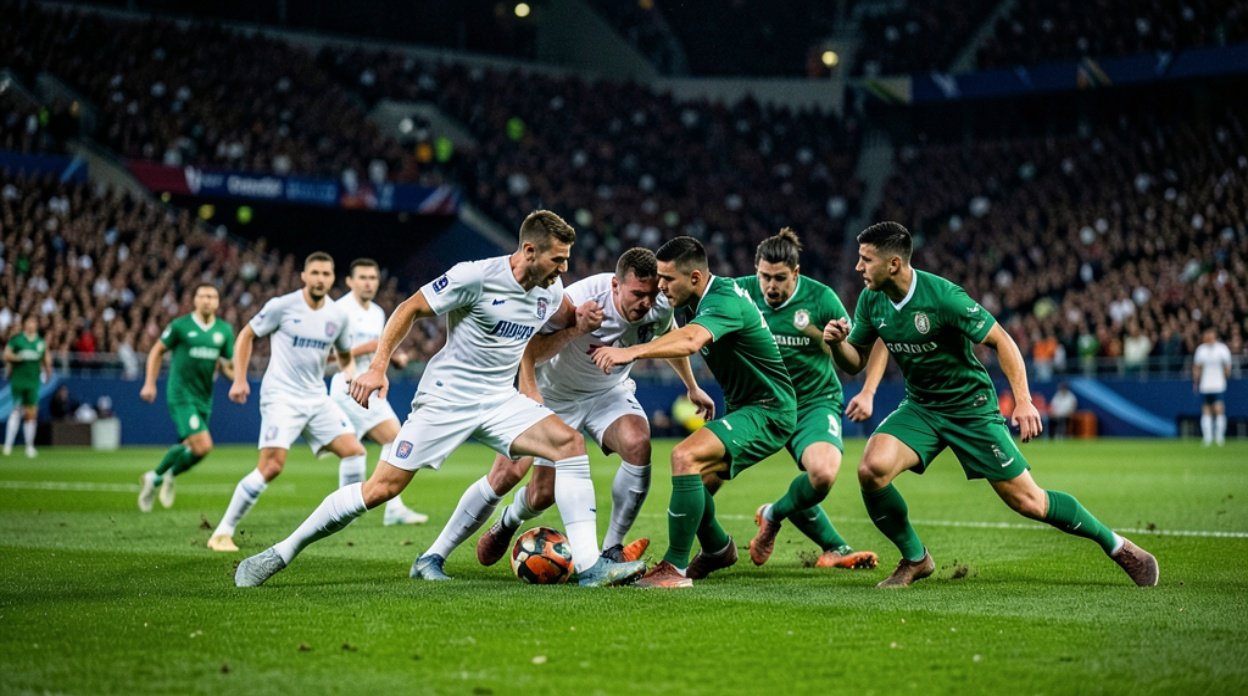
The atmosphere inside the colossal stadium was electric, a vibrant tapestry of national colours and fervent chants. The stakes couldn’t have been higher; a place in the next round of the prestigious global football championship hung in the balance. England, clad in their pristine white kit, and Mexico, in their iconic green, took to the field under the intense glare of floodlights and millions of watchful eyes. The opening exchanges were cagey, a feeling-out process as both teams tried to assert dominance in the midfield. England, known for their structured approach and defensive solidity, aimed to control possession and build from the back, while El Tri, with their flair and quick transitions, looked to exploit any gaps with their nimble attackers.
The initial twenty minutes unfolded as a tactical chess match, punctuated by moments of individual brilliance but lacking a definitive breakthrough. Both goalkeepers were tested, but neither side truly stamped their authority on the game. The tension was building, the anticipation palpable, as fans braced themselves for a moment that would ignite the contest. However, what transpired next was not a moment of attacking genius, but a flashpoint of disciplinary action that would irrevocably alter the course of the match and set the stage for one of the most dramatic comebacks in recent memory. It was an incident that sent shockwaves through the stadium and across the footballing world, transforming the complexion of the game from a balanced contest into an seemingly insurmountable challenge for one side.
The Early Disruption: A Red Card That Changed Everything
The clock had barely ticked past the 25-minute mark when the defining moment of the match arrived, a decision that would cast a long shadow over England’s aspirations. A quick counter-attack by El Tri saw their agile winger surge down the left flank, leaving England’s right-back scrambling. In a desperate attempt to halt the progress and prevent a clear goal-scoring opportunity, England’s central defender, let’s call him Mark Reynolds, lunged in with a tackle from behind. The referee, without hesitation, blew his whistle and brandished a straight red card. The decision was instantaneous, leaving no room for doubt or VAR intervention regarding the severity of the foul. Reynolds, head bowed, slowly trudged off the pitch, his departure met with a mixture of gasps from England supporters and jubilant roars from the Mexican contingent.
The ramifications were immediate and profound. England was down to ten men with over two-thirds of the match still to play against a full-strength, highly motivated Mexican side. The initial reaction on the English bench was one of disbelief and frustration, quickly followed by a flurry of urgent tactical discussions. The crowd’s mood shifted dramatically; what was once a balanced expectation now tilted heavily in favour of El Tri. Pundits in the commentary box began to write England off, discussing the impossibility of overcoming such a numerical disadvantage at this elite level of competition. For Mexico, it felt like an unexpected gift, an open invitation to seize control and dictate the flow of the game, seemingly paving a straightforward path to victory. The challenge for England was not just to survive, but to somehow find a way to compete, to adapt, and to defy the overwhelming odds that had suddenly stacked against them.
Tactical Masterclass: England’s Formation Shift and Resilience
In the immediate aftermath of the red card, the atmosphere on the pitch became a crucible for England’s tactical acumen and mental fortitude. The manager, a figure renowned for his calm demeanour and strategic foresight, made a critical decision that would redefine the team’s approach. Instead of succumbing to defensive panic, he orchestrated a seamless and intelligent formation shift, transforming the team’s structure from a conventional 4-3-3 into a more compact and resilient 4-4-1. This was not merely about dropping a player; it was about reimagining roles, re-establishing lines of engagement, and instilling a renewed sense of purpose. The change was executed with remarkable discipline, showcasing the players’ understanding and commitment to their collective goal, even as the numerical disadvantage loomed large.
Reconfiguring the Defence: A Fortress with Ten Men
The shift to a 4-4-1 meant sacrifices and new responsibilities across the board. The remaining central defender stepped up as the undisputed leader of the backline, marshalling his colleagues with authority. The full-backs, usually encouraged to push forward, were now instructed to be far more conservative, prioritizing defensive solidity above all else. Their role became one of containment, diligently tracking Mexico’s wide players and ensuring no easy crosses or runs in behind. The midfield, now a flat four, became the bedrock of England’s defensive strategy. The two central midfielders formed a formidable screen, protecting the defence, breaking up play, and relentlessly harrying Mexican attackers. Their work rate was monumental, covering vast expanses of the pitch, denying El Tri space to operate in central areas. The wide midfielders, traditionally more offensively oriented, were transformed into diligent defensive wingers, tracking back deep into their own half, effectively forming a second defensive line. This created a compact, narrow block that was incredibly difficult for Mexico to penetrate. England’s defensive principles became crystal clear: deny central access, force Mexico wide, and then swarm any player who ventured into dangerous areas. Every tackle, every block, and every interception was celebrated as a small victory, contributing to the growing sense of an impenetrable fortress.
- Compactness: The team maintained extremely tight lines between defence and midfield, reducing the gaps Mexico could exploit. This forced El Tri to circulate the ball horizontally rather than vertically.
- Zonal Marking with Man-Oriented Pressure: While maintaining a zonal shape, specific players were tasked with man-marking key Mexican creators when they entered certain zones, disrupting their rhythm.
- Disciplined Pressing Triggers: England’s lone striker and advanced midfielder (the ‘1’ in 4-4-1) initiated presses only when specific triggers occurred (e.g., a poor pass, a player turning his back), conserving energy while still harassing the opposition.
- Full-Backs’ Restraint: Both full-backs, usually avenues for attack, became almost exclusively defensive, prioritizing shutting down Mexican wingers and overlapping runs. Their discipline was paramount.
- Central Midfield Shield: The two central midfielders worked in tandem, one often dropping deeper to cover the backline, while the other stepped out to engage, forming a robust shield. Their constant communication and coordination were vital.
Counter-Attacking Prowess: Striking When It Matters Most
While the defensive setup was crucial for survival, England knew that simply absorbing pressure for 65 minutes would likely lead to their downfall. They needed an outlet, a way to relieve pressure and, more importantly, to pose an offensive threat. The 4-4-1 formation, while primarily defensive, also provided a framework for incisive counter-attacks. The lone striker became a focal point, a target man capable of holding up the ball and bringing others into play. When possession was regained, the instruction was clear: move the ball quickly, directly, and with purpose. Long, diagonal passes from the deeper midfielders or defenders aimed to bypass Mexico’s midfield and find the lone forward or one of the rapidly advancing wide midfielders.
The key to England’s counter-attacking success lay in its efficiency and ruthlessness. With fewer players, every offensive foray had to be meaningful. There was no room for speculative shots or wasteful possession. When an opportunity arose, England committed numbers quickly, with midfielders making lung-bursting runs to support the striker. The element of surprise was often on their side; Mexico, confident in their numerical advantage, would push more players forward, leaving themselves vulnerable to rapid transitions. England’s first goal, a clinical finish after a lightning-fast break, was a testament to this strategy. A cleared corner kick found a central midfielder who immediately launched a pass over the top to the striker, who then threaded it through to a surging wide player for the finish. It was a perfectly executed counter, demonstrating that even with ten men, England possessed the bite to hurt their opponents.
- Direct Play: Immediately upon winning possession, the ball was moved forward with urgency, often bypassing the midfield to find the lone striker or wide runners.
- Exploiting Space: Mexico’s aggressive attacking posture meant they often left significant space in behind their full-backs and in transition, which England targeted.
- Clinical Finishing: With fewer chances created, England’s attackers had to be exceptionally clinical. Every opportunity was treated as potentially decisive.
- Support Runs: Despite the numerical disadvantage, midfielders and even one of the full-backs (when absolutely safe) made intelligent, late runs to provide support and options in attack.
- Set-Piece Threat: England also looked to maximize set-piece opportunities, using their aerial prowess to create chances and relieve pressure.
Mental Fortitude and Leadership: The Unseen Advantage
Beyond the tactical diagrams and formation changes, the true engine of England’s ten-man triumph was their collective mental fortitude and exceptional leadership. The red card could have easily shattered their resolve, leading to disorganization and despair. Instead, it galvanized them. The senior players on the pitch immediately stepped up, communicating constantly, encouraging their teammates, and ensuring that no one’s head dropped. The captain, a towering presence in midfield, was a beacon of calm and determination, his gestures and shouts directing traffic and reinforcing the manager’s instructions. Every successful tackle was met with pats on the back, every cleared ball with words of encouragement. This unwavering belief in each other, even in the face of overwhelming odds, became their secret weapon.
The manager’s role in cultivating this mentality cannot be overstated. His calm demeanour on the sidelines, his clear instructions during the brief water break, and his visible trust in his players instilled confidence. He empowered them to adapt, to fight, and to believe in their ability to defy the narrative. This psychological strength manifested in their relentless work rate, their willingness to track back, and their incredible discipline to stick to the tactical plan. Mexico, on the other hand, perhaps grew complacent or frustrated. They expected England to crumble, and when they didn’t, El Tri’s own mental resolve seemed to waver, leading to moments of individual error and collective impatience. England’s triumph was as much a psychological victory as it was a tactical one, a testament to the power of a unified team spirit under extreme pressure.
El Tri’s Dilemma: Unable to Break Down the Ten-Man Wall
For Mexico, the red card incident must have felt like a golden ticket. With a numerical advantage, particularly against a team like England, the expectation was a dominant performance, a relentless siege culminating in a comfortable victory. Yet, as the minutes ticked by, El Tri’s initial confidence began to erode, replaced by a growing sense of frustration and bewilderment. Their tactical approach, initially aggressive and expansive, struggled to adapt to the reality of facing a compact, disciplined ten-man unit. The “paradox of the extra man” began to manifest itself – sometimes, having an extra player can actually complicate matters, leading to overconfidence, lack of urgency, and a breakdown in creative problem-solving.
Mexico’s struggles were multifaceted. They enjoyed vast amounts of possession, but it was often sterile possession, circulating the ball without truly penetrating England’s defensive lines. Their wingers, usually so dangerous, found themselves double-marked or facing deep-lying full-backs with midfield support, making it incredibly difficult to deliver quality crosses or cut inside. Their central midfielders, accustomed to finding pockets of space, were stifled by England’s compact four-man midfield screen. Shots from distance were often blocked, and through-balls were intercepted before they could reach their intended targets. The Mexican coaches tried to inject pace and creativity with substitutions, but even these changes failed to unlock the rigid English defence. The longer the game wore on, the more desperate their attacks became, often leading to rushed decisions and misplaced passes. The frustration became palpable, not just on the pitch but also among the vociferous Mexican supporters, who grew increasingly agitated as their team failed to capitalize on their significant advantage.
- Lack of Penetration: Despite high possession statistics, El Tri struggled to break through England’s deep-lying, compact defensive block. Their attacks often lacked incisiveness.
- Over-Reliance on Width: Mexico frequently tried to exploit the flanks, but England’s diligent wide midfielders and full-backs often nullified these threats, forcing poor crosses or turnovers.
- Frustration and Impatience: As time wore on and opportunities dwindled, Mexican players showed visible signs of frustration, leading to less composed decision-making and speculative efforts.
- Predictable Attacking Patterns: El Tri’s attacking moves became somewhat predictable, allowing England’s disciplined defence to anticipate and shut down their avenues of attack.
- Inadequate Midfield Creativity: While technically gifted, Mexico’s central midfielders struggled to unlock the English defence with creative passes or dynamic runs, often resorting to sideways passes.
Key Moments and Game-Changing Performances
In a match defined by such extraordinary circumstances, individual brilliance and decisive moments become magnified. While the collective effort of England was undoubtedly the cornerstone of their triumph, several standout performances and pivotal events irrevocably shaped the outcome, turning a potential rout into a historic upset. These were the moments that swung the momentum, provided the belief, and ultimately delivered the goals that sealed an improbable victory.
Goalkeeper’s Heroics: The Last Line of Defence
Every great ten-man stand requires an exceptional performance from the goalkeeper, and England’s shot-stopper delivered precisely that. From the moment the red card was shown, he elevated his game to an almost superhuman level. He commanded his box with authority, barking instructions to his defenders, and organizing the backline with precision. His positioning was immaculate, consistently denying Mexico clear angles for shots. Crucially, he made several point-blank saves that were simply breathtaking – diving acrobatically to tip a fierce drive around the post, rushing off his line to smother a dangerous through-ball, and calmly plucking high crosses out of the air under immense pressure. One particular save in the second half, a full-stretch dive to deny a curling effort that seemed destined for the top corner, was a game-changer. It not only kept England in the lead but also visibly deflated the Mexican attackers, who must have felt they were up against an insurmountable barrier. His composure under pressure and his ability to distribute the ball quickly to initiate counter-attacks were also instrumental, turning defensive actions into offensive springboards.
Unsung Heroes: Midfield Engines and Defensive Anchors
While the goal scorers often grab the headlines, the true unsung heroes of this ten-man triumph were the tireless midfielders and the remaining defensive anchors. The two central midfielders, let’s call them Liam and Ethan, covered an astonishing amount of ground. They were everywhere: breaking up Mexican attacks, tracking back relentlessly, and then quickly transitioning to support the lone striker. Their discipline in maintaining their defensive shape, even when exhausted, was exemplary. They made crucial interceptions, blocked countless shots, and consistently won aerial duels against a physically imposing Mexican midfield. Similarly, the wide midfielders, who were essentially playing as auxiliary full-backs for much of the game, put in monumental shifts, constantly tracking back to support their defenders and then bursting forward on the counter. Their work rate embodied the sacrificial nature of England’s performance, putting the team’s needs above individual glory, and relentlessly fighting for every inch of the pitch. The remaining central defender, after the red card, stepped into the void left by his dismissed teammate with commanding authority, organizing the backline and making several critical clearances and last-ditch tackles that prevented certain goals.
The Decisive Strikes: Goals Born from Adversity
The beauty of football often lies in its moments of pure, unadulterated drama, and England provided two such instances that will forever be etched in the memory of their supporters. The first goal, which arrived against the run of play in the late stages of the first half, was a masterclass in counter-attacking football. After a prolonged period of Mexican pressure, England regained possession deep in their own half. A quick, incisive pass bypassed Mexico’s midfield, finding the lone striker who, with remarkable composure, held off a defender before playing a perfectly weighted through-ball into the path of a surging wide midfielder. The midfielder, having tracked back diligently all game, suddenly burst forward, took a touch, and unleashed a powerful shot into the roof of the net. The stadium erupted in a mixture of shock and euphoria, as England, with ten men, had taken an improbable lead.
The second goal, arriving in the second half when Mexico was throwing everything forward in search of an equalizer, was a testament to England’s unwavering belief and clinical edge. Another rapid counter-attack, initiated by a heroic block in England’s penalty area, saw the ball cleared long. The lone striker, once again, was the key. He outmuscled two defenders, carried the ball into the Mexican half, and then, with incredible vision, spotted a late run from an attacking midfielder who had arrived from deep. A perfectly timed pass split the defence, and the midfielder, with the cool head of a seasoned veteran, slotted the ball past the onrushing goalkeeper. It was a goal that effectively sealed the victory, a breathtaking moment of defiance that perfectly encapsulated England’s spirit and tactical brilliance on a day when they truly had to earn every single shred of success.
Post-Match Reflections: A Victory for the Ages
As the final whistle pierced the cacophony of the stadium, a wave of stunned silence fell over the Mexican supporters, while the English contingent erupted in joyous disbelief. The scoreboard, displaying a result that few could have predicted, solidified the reality of what had just transpired. England had not just won; they had triumphed against insurmountable odds, crafting a narrative of resilience, tactical genius, and unwavering spirit that will be recounted for generations. The manager, usually stoic, allowed a rare smile to break through as he embraced his coaching staff and then congratulated every single player, acknowledging the monumental effort they had expended. His post-match press conference was a masterclass in humility and praise, focusing entirely on the players’ character and their collective belief, highlighting how their dedication to the plan and to each other had been the true catalyst for victory.
Players, many of them visibly exhausted, celebrated with their fans, soaking in the adulation. Interviews from the dressing room spoke of an unshakeable belief, a shared understanding that the red card, while a setback, was also a challenge to be overcome. They talked about the communication on the pitch, the constant encouragement, and the refusal to yield an inch. Pundits, who had initially written England off, were left scrambling for superlatives, hailing the performance as one of the most significant comebacks in global football championship history. The tactical adjustments, the individual heroics, and the collective mental fortitude were dissected and praised, offering invaluable lessons for coaches and players worldwide. For Mexico, it was a bitter pill to swallow, a lesson in the dangers of underestimating a wounded opponent, and a stark reminder that numerical advantage does not automatically guarantee victory. This match transcended a mere football game; it became a testament to the enduring power of the human spirit in the face of adversity, forever cementing its place as a truly unforgettable encounter in the annals of the sport.
| Situation | England’s Response (Tactics/Mentality) | El Tri’s Challenge (Tactics/Mentality) | Outcome/Impact |
|---|---|---|---|
| Pre-Red Card (0-25 min) | Structured 4-3-3, controlling possession, probing for openings. Cautious start. | Aggressive 4-2-3-1, high press, seeking quick transitions. Confident. | Evenly matched contest, few clear chances for either side. |
| Red Card Incident (25 min) | Immediate shock, quick managerial intervention to shift to 4-4-1. Focus on discipline. | Perceived immediate advantage, increased attacking intent, pushing full-backs higher. | England down to 10 men, severe disadvantage. Mexico gains psychological edge. |
| Post-Red Card (Defensive Phase) | Compact 4-4-1 block, zonal defence, tireless midfield tracking, full-backs stay deep. Goalkeeper commanding. | High possession, increased crosses, attempts to play through the middle. Growing frustration. | England’s defensive wall holds firm, Mexico struggles for penetration. England absorbs pressure effectively. |
| Post-Red Card (Offensive Phase) | Direct counter-attacks, lone striker as target, rapid transitions, clinical finishing. Opportunistic. | Vulnerable to counters due to committed numbers forward. Overconfidence in defence. | England scores two stunning counter-attacking goals, capitalizing on Mexico’s exposed defence. |
| Full-Time | Resilient, unified, tactically brilliant. Overcame immense odds. Celebrates historic triumph. | Frustrated, unable to break down 10-man opposition. Disappointment despite numerical advantage. | England 2-0 Mexico. A legendary ten-man victory for England. |
Frequently Asked Questions (FAQ)
Q1: What was the significance of the red card incident for England?
The red card incident, occurring relatively early in the match (around the 25-minute mark), was the single most significant turning point. It immediately put England at a severe numerical disadvantage, forcing an entire tactical rethink and testing the team’s mental resilience to its absolute limit. It transformed the game from a balanced contest into an uphill battle, making England’s subsequent triumph all the more remarkable. Its significance lies in how it acted as a catalyst, either to crumble or to galvanize, and England chose the latter, using it as motivation to defy expectations.
Q2: How did England adapt tactically after going down to ten men?
England’s manager implemented a swift and decisive tactical shift, moving from their initial 4-3-3 formation to a highly compact and disciplined 4-4-1. This involved the wide midfielders dropping back to form a flat four across the midfield, effectively creating two lines of four in defence and midfield. The lone striker became the focal point for counter-attacks, emphasizing direct play and clinical finishing. This defensive solidity, combined with opportunistic and rapid transitions, allowed England to absorb pressure while still posing a potent threat on the break.
Q3: Which players were crucial to England’s ten-man triumph?
While it was a monumental team effort, several players stood out. The goalkeeper delivered a heroic performance, making critical saves and commanding his area. The two central midfielders were tireless engines, covering vast amounts of ground defensively and initiating counter-attacks. The remaining central defender marshalled the backline with authority, and the lone striker’s ability to hold up the ball and create chances on the counter was invaluable. The wide midfielders, despite their offensive roles, showed immense discipline in tracking back, contributing significantly to the defensive solidity.
Q4: What tactical mistakes did El Tri make against the ten-man England?
El Tri made several tactical missteps. They struggled to adapt their attacking patterns against England’s deep, compact block, often resorting to predictable crosses or speculative shots from distance. They became overly reliant on wide play, which England effectively nullified. Perhaps most crucially, they allowed themselves to become vulnerable to counter-attacks by committing too many players forward, underestimating England’s ability to transition quickly and clinically. Their growing frustration also seemed to affect their decision-making and composure.
Q5: How does this match rank among dramatic global football championship victories?
This match will undoubtedly be remembered as one of the most dramatic and significant victories in global football championship history. Ten-man triumphs at this elite level are exceedingly rare, especially against a strong opponent like Mexico. The combination of an early red card, England’s tactical resilience, the individual heroics, and the stunning counter-attacking goals place this game among the pantheon of unforgettable upsets and displays of mental fortitude. It serves as a powerful reminder that in football, the human spirit can often overcome numerical disadvantages.
Q6: What lessons can be learned from England’s resilience in this game?
England’s performance offers numerous lessons: the importance of tactical flexibility under pressure, the critical role of mental fortitude and leadership within a squad, and the power of collective belief. It demonstrates that even when facing seemingly insurmountable odds, discipline, clear communication, and a well-executed game plan can yield extraordinary results. It also highlights the value of every player understanding their role and sacrificing for the team’s greater good, irrespective of the circumstances.
Q7: Was there any controversy surrounding the referee’s decisions in the match?
The primary point of controversy, if any, surrounded the red card incident itself. While the decision was a straight red for a denial of a clear goal-scoring opportunity, which is generally clear-cut, the intensity of the moment and its early timing always invite debate. However, upon review, most pundits agreed with the referee’s call. Beyond that, the referee largely allowed the game to flow, and there were no other major decisions that significantly impacted the outcome or were widely contested by either side.
Q8: How did the supporters react to this improbable victory?
The English supporters went from despair and anxiety after the red card to utter euphoria and disbelief at the final whistle. Their chants grew louder and more defiant as the game progressed, becoming a vital source of encouragement for the ten men on the pitch. The Mexican supporters, conversely, experienced a rollercoaster of emotions, from initial jubilation at the red card to growing frustration, and ultimately, a stunned silence of disappointment as their team failed to capitalize on their advantage. The contrast in reactions perfectly encapsulated the dramatic shift in fortunes.
Q9: What was the lasting impact of this result on both teams?
For England, this victory was a massive psychological boost, instilling immense confidence and belief in their ability to overcome adversity. It forged a stronger team spirit and proved their tactical adaptability on the biggest stage. For Mexico, it was a deflating result, forcing them to re-evaluate their approach and perhaps address issues of complacency or tactical rigidity when facing a deep-lying defence. It served as a stark reminder that talent and numerical advantage alone do not guarantee success in a major international tournament.
Q10: Can a ten-man team realistically win a major global football match consistently?
While England’s triumph was incredible, winning a major global football match consistently with ten men is not realistic. It is an extraordinary feat that requires a perfect storm of tactical discipline, individual brilliance, unwavering mental fortitude, and often, an element of luck or an opponent’s missteps. Teams are designed to operate with eleven players, and a numerical disadvantage fundamentally alters dynamics. This victory is celebrated precisely because of its rarity and the immense difficulty involved, making it a legendary outlier rather than a repeatable strategy.