
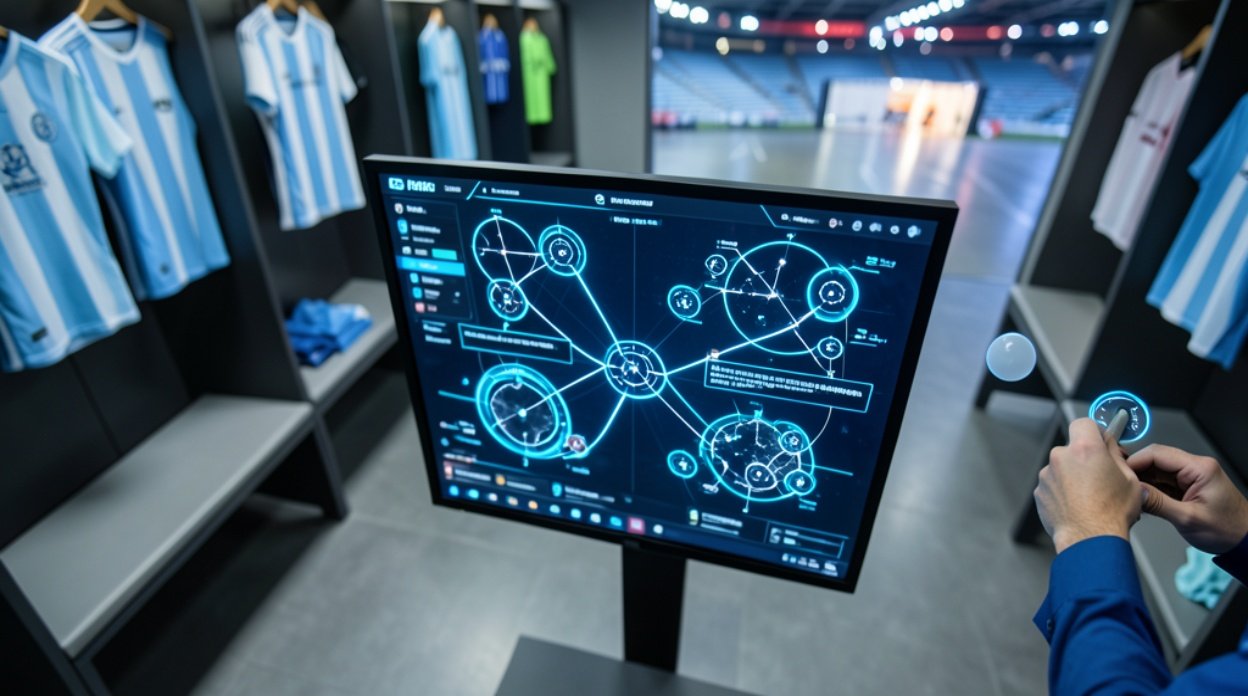
As the global football season converges on the vast and diverse landscapes of Canada, Mexico, and the United States, all eyes are locked on the reigning champions. The 2026 Soccer Summer represents not just a defense of a crown, but an ultimate test of longevity, tactical adaptability, and squad evolution. Under the meticulous stewardship of their mastermind manager, La Albiceleste enters this grand stage with a target on their backs. Having tasted ultimate glory previously, the challenge now lies in avoiding the complacency that has historically plagued returning champions.
Tactical evolution in international football moves at a breakneck pace. The systems that proved successful years ago must be refined, re-engineered, or completely overhauled to counter the analytical scouting of elite opponents. This comprehensive La Albiceleste 2026 tactical breakdown dissects how the South American giants plan to navigate the high-altitude venues, immense travel distances, and tactical diversity of the upcoming tournament to retain their status at the summit of global football.
—
The Scaloni Philosophy: Pragmatism Over Dogma
At the heart of the team’s success is a fundamental refusal to be shackled by a single aesthetic style. Unlike sides that demand high possession for the sake of control, or those that retreat into low blocks by default, this coaching staff prioritizes situational adaptability. During the previous championship run, we witnessed a side that could press high against European midfields, drop into a compact 4-4-2 against possession-heavy sides, or transition into a fluid 3-5-2 when protecting a lead.
The Hybrid 4-3-3 / 4-4-2 Out-of-Possession Shape
Out of possession, the team consistently morphs into a compact mid-block. The defensive structure is designed to deny space between the lines, forcing opponents to play wide where they can be trapped against the touchline. This hybrid defensive shape relies on the versatility of the wide midfielders, who must tuck inward to form a narrow bank of four when the opposition attempts to build through the center.
- The Narrow Mid-Block: Restricting access to the half-spaces is the primary objective. By keeping the distance between the defensive line and the midfield line under fifteen meters, opponents are forced into low-percentage long balls.
- The Lateral Trap: When the ball is forced wide to the opposition fullback, the nearest central midfielder and the fullback aggressively close the space, creating a two-vs-one numerical advantage to force turnovers.
- Controlled Aggression: Rather than chasing the ball across the entire pitch, the team establishes a “confrontation line” just past the halfway line, conserving energy in the demanding summer heat.
—
The Engine Room: A Midfield of Spatial Masters
If defense wins tournaments, it is the midfield that dictates how those victories are carved out. The South American champions boast a midfield unit characterized by technical security, high football intelligence, and an extraordinary work rate. The primary tactical objective of this engine room is to create “numerical superiorities” in the central third of the pitch, allowing them to control the tempo of the match at will.
The Quadrilateral Rotation
During the build-up phase, the midfield does not remain static. Instead, they employ a shifting quadrilateral shape. One midfielder drops between or to the side of the center-backs to form a temporary back three, while the remaining three midfielders form a triangle to bypass the opponent’s first line of pressing. This constant rotation makes man-marking nearly impossible for opposing midfields.
This system relies heavily on players who excel under pressure. With opponents deploying high-intensity presses, the ability of deep-lying playmakers to receive the ball with their backs to goal, turn, and progress play is paramount. The tactical framework ensures that there is always a short passing option available, reducing the reliance on long, low-percentage clearances.
| Tactical Phase | Core Objective | Key Player Roles | Expected Metric Focus |
|---|---|---|---|
| In-Possession Build-up | Bypass opposition press via short, vertical progressions. | Center-backs split wide; single pivot drops deep to collect. | 90%+ passing accuracy in defensive third. |
| Defensive Transition | Immediate counter-press to disrupt counter-attacks. | 8-second aggressive press; high line traps attackers offside. | PPDA (Passes Per Defensive Action) under 8.5. |
| Attacking Third Creation | Overload the half-spaces to release overlapping fullbacks. | Winger cuts inside; interior midfielder occupies the half-space. | High volume of key passes from wide-interior zones. |
| Low-Block Defending | Protect the central penalty area and deny cross-receptions. | Center-backs occupy six-yard box; double pivot screens. | High clearance percentage; minimal shots conceded inside the box. |
—
Defensive Solidification: High-Line Risk vs. Reward
To dominate games in the 2026 Soccer Summer, the defensive line must play with courage. The tactical blueprint calls for a high defensive line during possession phases, compressing the pitch and keeping the team compact. However, this strategy carries inherent risks, particularly against opponents possessing elite pace on the wings.
The Rest-Defense Structure
To mitigate the threat of rapid counter-attacks, the coaching staff emphasizes a strict “rest-defense” (preventative positioning while in possession). Usually, a 3+2 structure is maintained at the back. While one fullback joins the attack, the other tucks inside to form a back three alongside the two central defenders. Ahead of them, a double-pivot screens the central passing lanes.
- Anticipatory Positioning: Center-backs do not simply watch the attack; they actively position themselves tightly against opposition strikers, ready to engage the moment possession is lost.
- Tactical Fouling: When a counter-press is bypassed, the deep midfielders are instructed to commit smart, tactical fouls in the opposition half to allow the defensive unit time to reorganize.
- Goalkeeper Sweep-Keeping: The modern goalkeeper must act as a sweeper-keeper, positioned high outside his penalty area to intercept long balls played over the top of the high defensive line.
This aggressive defensive posture requires center-backs who are not only physically dominant in aerial duels but possess the recovery speed to track back in open space. The partnership at the heart of the defense will be tested rigorously by the dynamic transition play expected from elite European and African counterparts during this global football season.
—
Attacking Dynamics: Fluidity, Decoys, and Overloads
Offensively, La Albiceleste moves away from rigid positional play in favor of dynamic, relationship-based football. The attacking philosophy is built on creating “overloads to isolate.” By overloading one side of the pitch with short, intricate passing sequences, they draw the opponent’s defensive block toward the ball, before switching play rapidly to an isolated winger or an overlapping fullback on the opposite flank.
Exploiting the Half-Spaces
The half-spaces (the vertical lanes between the flanks and the center of the pitch) are the primary creative zones. The attacking midfielders and inverted wingers are tasked with occupying these pockets of space. By receiving the ball in the half-spaces, they force opposing central defenders to make a decision: step out of the defensive line to engage, leaving space behind, or drop back, allowing the attacker time to turn and shoot or slide a through-ball to a running forward.
Furthermore, the presence of highly mobile forwards who can drag defenders out of position is crucial. The strikers are rarely static target men; they drop deep to link play, acting as decoys to create space for late-running midfielders entering the penalty area. This fluid rotation ensures that goal-scoring threats originate from multiple areas of the pitch, making the team incredibly difficult to scout and neutralize.
—
The Physical and Environmental Challenges of North America 2026
A tactical plan is only as good as the physical capacity of the players executing it. The upcoming tournament presents unique challenges that will heavily influence tactical decisions. Travel distances between matches can span thousands of miles, crossing multiple time zones. Additionally, matches played in the searing heat of the southern United States or at the high altitudes of Mexico City will demand meticulous squad rotation and energy-preservation tactics.
To combat physical degradation, expect the coaching staff to utilize their full squad depth. The high-pressing system may be reserved for specific phases of matches rather than sustained ninety-minute efforts. We are likely to see more periods of controlled possession, where the team slows the tempo of the game down to walking pace, forcing the opponent to run while the ball does the work. Managing energy expenditures during the group stages will be the defining factor in whether the squad possesses the physical freshness required to navigate the grueling knockout rounds.
—
FAQ: Tactical Questions Surrounding the Champions
How will La Albiceleste handle the high altitudes of certain venues?
The coaching staff is expected to adapt by employing a lower defensive block and reducing high-intensity pressing phases. By dropping into a compact mid-to-low block, the team reduces the physical distance players must sprint, preserving oxygen and muscle endurance. Possession will be kept low and slow to control the game clock without physical overexertion.
Can the team successfully defend the title without relying solely on aging superstars?
Yes, the tactical framework has evolved to distribute creative and defensive responsibilities more evenly across the squad. While veteran leadership remains vital for managing high-pressure moments, the integration of energetic, highly technical younger profiles in midfield and attack ensures that the team maintains its intensity and tactical dynamism.
What is the primary vulnerability in this tactical setup?
The main vulnerability lies in the space left behind the fullbacks when they join the attack. If the rest-defense structure fails to disrupt a counter-attack immediately, quick, direct opponents can exploit the wide channels, putting immense pressure on the central defenders to defend in isolated one-on-one situations.
How does the squad plan to break down low-block defenses?
Against deeply entrenched defenses, the team relies on rapid ball circulation, third-man runs, and isolating dynamic wingers in wide areas. By moving the ball quickly from side to side, they aim to stretch the opponent’s defensive lines, creating temporary gaps in the half-spaces for creative midfielders to exploit.
Will we see a change in formation during the tournament?
Tactical flexibility is a hallmark of this coaching staff. While a fluid 4-3-3 is the base formation, expect quick transitions to a 3-5-2 to match two-striker systems or to protect leads late in matches, as well as a narrow 4-4-2 when defensive solidity is prioritized over high-pressing phases.
—
Conclusion: The Path to Immortality
Defending a global title is perhaps the most difficult achievement in modern sport. It requires a perfect alignment of tactical innovation, physical resilience, mental fortitude, and a touch of fortune. As the summer tournament approaches, La Albiceleste possesses the blueprint required to scale the mountain once more. By combining their trademark tactical flexibility with an influx of hungry, youthful talent, the South American giants are well-equipped to write another glorious chapter in football history during the North America 2026 campaign.
“`