
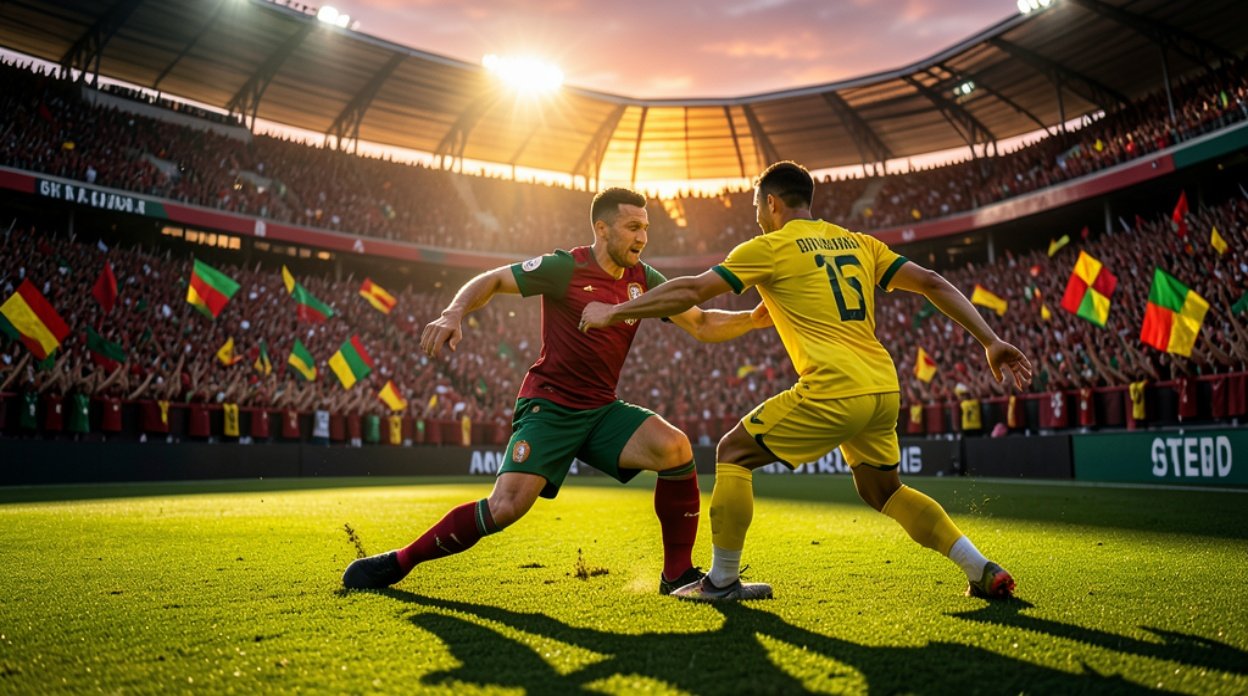
Portugal vs Colombia Prediction 2026: Tactical Analysis, Key Matchups, and Betting Tips for the Summer Showdown
As the grand 2026 Soccer Summer takes center stage across North America, football purists are preparing for one of the most intriguing cross-continental tactical battles of the tournament. The Iberian giants, often referred to as A Seleção das Quinas, are set to lock horns with the vibrant, high-pressing South American powerhouses, Los Cafeteros of Colombia. This highly anticipated fixture promises to be a masterclass in modern tactical innovation, pitting the possession-heavy, structured philosophy of European football against the vertical, aggressive, and emotionally charged transition game of South America.
Both nations enter this fixture with squads capable of lifting the trophy in mid-July. Portugal boasts an embarrassment of riches across every position, blending seasoned champions with an incredibly gifted generation of technical youngsters. Colombia, meanwhile, has undergone a tactical renaissance under their astute coaching staff, remaining one of the hardest teams in the world to break down while possessing devastating speed on the counter-attack. In this extensive tactical preview and match prediction, we dissect the systems, individual battles, and statistical metrics that will define this epic confrontation.
—
Tactical Blueprint: How “A Seleção” Shapes Up
Portugal’s tactical setup under their current management is built on fluid positional play, structural flexibility, and overwhelming the opposition in the half-spaces. No longer reliant on a single focal point, the European side has evolved into a multi-layered attacking machine that can morph shapes seamlessly depending on the phase of play.
The Fluid 4-3-3 / 3-4-2-1 Hybrid
On paper, Portugal often aligns in a classic 4-3-3, but in possession, this structure quickly transitions into a 3-2-4-1 or a 3-4-2-1. One of the fullbacks—frequently a highly technical operator like João Cancelo or Nuno Mendes—will tuck inside to act as an inverted midfielder or push high and wide to allow the nominal wingers to cut inside. This creates a box midfield in the center of the pitch, allowing Portugal to dominate possession and prevent central counter-attacks through structured rest defense.
By establishing this numerical superiority in the middle third, Portugal forces opponents into a low block. The three-man backline, anchored by the peerless Rúben Dias, remains composed under pressure, acting as the primary instigator of vertical progression. The objective is clear: circulate the ball quickly from side to side until a passing lane opens up to find the creative engines operating between the opponent’s defensive and midfield lines.
Key Catalyst: The Creative Engine of Bruno Fernandes
At the heart of everything creative for the European side is Bruno Fernandes. Operating as an advanced playmaker, Fernandes is given the tactical freedom to drift across the pitch, overloading zones where the opposition is vulnerable. His partnership with Bernardo Silva is crucial; while Silva provides the pauses, ball retention, and tempo control, Fernandes is the high-risk, high-reward orchestrator who looks to play the killer pass.
Fernandes’ ability to deliver precise first-time passes behind opposition defensive lines makes him a constant threat. In this matchup against a highly physical Colombian midfield, his spatial awareness will be tested. If he can consistently find pockets of space behind Colombia’s double pivot, Portugal will look to unleash their rapid wide forwards into the channels.
—
Tactical Blueprint: “Los Cafeteros” and Their High-Intensity System
Colombia enters this clash representing the very best of South American football: relentless physical conditioning, aggressive pressing, and explosive verticality. Under their tactical leadership, Los Cafeteros have developed a highly cohesive defensive unit that transitions into attack with terrifying speed.
The High-Intensity Pressing and Defensive Compactness
Colombia typically utilizes a highly structured 4-2-3-1 or a compact 4-3-3 that emphasizes mid-block pressing traps. Rather than chasing opponents high up the pitch mindlessly, they prefer to shepherd possession into wide areas before snapping into aggressive traps. Once the ball enters the touchline zones, Colombia’s fullbacks and central midfielders lock on, utilizing their physical superiority to force turnovers.
When defending in their own half, Colombia maintains a narrow, compact shape. The two central defenders are protected by a incredibly hard-working double-pivot that screens the defensive line. This makes central penetration almost impossible, forcing opponents to cross from deep, a scenario that Colombia’s aerially dominant defenders relish.
The Resurgence of the Playmaker: James Rodríguez’s Role
While modern football has largely phased out the traditional number ten, Colombia has successfully accommodated the genius of James Rodríguez by structuring a hard-running system around him. Operating with tactical license, Rodríguez acts as the primary transition hub. When Colombia wins the ball back deep, they immediately look for James, who possesses the vision and technical quality to launch immediate counter-attacks.
Rodríguez’s ability to deliver exquisite diagonal balls to the overlapping runs of Luis Díaz on the left flank is a primary attacking avenue for Colombia. To protect James from his defensive limitations, the rest of the midfield unit executes high-volume defensive coverage, ensuring the team remains defensively stable even when their talisman rests during defensive phases.
—
Head-to-Head History and Recent Form
Historically, meetings between these two nations have been rare but incredibly intense. The contrasting football cultures always produce spectacles filled with tactical friction, individual brilliance, and high-intensity drama. In recent years, both teams have enjoyed stellar qualification campaigns, cementing their status as genuine contenders for the summer tournament in North America.
- Portugal’s Recent Form: Dominant in European qualifying, showcasing an incredibly stingy defense coupled with a high-scoring offense. They have shown immense tactical adaptability, winning matches both through dominant possession and clinical transitional play.
- Colombia’s Recent Form: Unbeaten in several high-profile South American fixtures, proving they can go toe-to-toe with the world’s absolute best. Their defensive organization has been their calling card, conceding very few goals from open play.
- Last Meeting: A tightly contested international friendly that ended in a tactical stalemate, highlighting just how closely matched these two tactical systems are when fully prepared.
—
Key Player Matchups on the Pitch
This match will ultimately be decided by individual battles in key zones of the pitch. Let’s analyze the three most critical matchups that tactical analysts will be watching closely.
Luis Díaz vs. Joao Cancelo: The Flank Warfare
This is arguably the most explosive matchup of the game. Luis Díaz, Colombia’s talismanic left-winger, possesses world-class dribbling, explosive acceleration, and the ability to cut inside to shoot. He will likely go head-to-head with João Cancelo. While Cancelo is an attacking virtuoso who excels in possession, he can occasionally be caught out of position when Portugal transitions defensively.
If Cancelo wanders too far inside to help build the play, Portugal’s right-sided center-back will be forced to cover the massive space left behind—a zone that Luis Díaz will look to exploit ruthlessly. Conversely, if Cancelo can force Díaz to defend deep in his own half, it will severely blunt Colombia’s counter-attacking threat.
Rúben Dias vs. Jhon Durán: Physicality in the Box
In the central attacking areas, Colombia’s physical, aggressive forward line led by the likes of Jhon Durán will clash directly with Portugal’s defensive general, Rúben Dias. Dias is renowned for his reading of the game, positioning, and leadership. However, Durán represents a chaotic, highly physical threat who thrives on aerial duels and physical contact.
This battle will be highly physical and psychological. If Durán can pin Dias and create space for runners coming from deep, Colombia’s attacking threat increases exponentially. Dias will need to use his positional intelligence to intercept passes before they reach the Colombian striker, avoiding getting dragged into a pure physical wrestling match.
João Neves vs. Richard Ríos: The Midfield Engine Room Battle
The control of the tempo will be decided in the engine room. Portugal’s young midfield prodigy João Neves brings relentless energy, exceptional press resistance, and clean ball progression. He will clash directly with Richard Ríos, Colombia’s midfield dynamic engine who combines South American grit with smooth ball-carrying ability.
Whichever player manages to dominate this central zone will dictate the rhythm of the game. If Ríos can disrupt Neves’ distribution, Portugal’s attacking transitions will become sluggish and predictable. If Neves bypasses the Colombian press, Portugal will easily feed their creative attackers in dangerous areas.
—
Detailed Expected Lineups and Squad Depth
Both managers have deep squads, allowing them to make tactical adjustments as the match progresses. Below is the projected starting lineups for this highly anticipated clash of titans.
| Metric / Position | Portugal (A Seleção das Quinas) | Colombia (Los Cafeteros) |
|---|---|---|
| Goalkeeper | Diogo Costa (Elite shot-stopper, excellent sweeping) | Camilo Vargas (Experienced, highly vocal leader) |
| Defensive Line | Nuno Mendes, Rúben Dias, Gonçalo Inácio, João Cancelo | Johan Mojica, Jhon Lucumí, Davinson Sánchez, Daniel Muñoz |
| Midfield Pivot | João Neves, Vitinha | Jefferson Lerma, Richard Ríos |
| Attacking Midfielders | Rafael Leão, Bruno Fernandes, Bernardo Silva | Luis Díaz, James Rodríguez, Jhon Arias |
| Central Striker | Gonçalo Ramos (or Diogo Jota) | Jhon Durán (or Rafael Santos Borré) |
| Tactical System | Fluid 4-3-3 / Possession-based Positional Play | High-intensity 4-2-3-1 / Direct Vertical Counter |
| Bench X-Factors | João Félix, Pedro Neto, Francisco Conceição | Luis Sinisterra, Richard Ríos, Jhon Córdoba |
—
Set-Piece Analysis and Tactical Vulnerabilities
In high-stakes tournament football, set-pieces often break the deadlock when open-play tactics cancel each other out. Both teams possess distinct profiles when it comes to dead-ball situations.
Portugal’s Set-Piece Threat: With deliverers like Bruno Fernandes and Bernardo Silva, Portugal’s delivery is always world-class. They rely on complex, rehearsed routines, utilizing blocking tactics to free up aerially proficient players like Rúben Dias and Gonçalo Inácio at the back post. Defensively, Portugal utilizes a hybrid marking system (zonal in the six-yard box, man-marking for runners). While highly organized, they have occasionally shown vulnerability to fast, near-post flick-ons.
Colombia’s Set-Piece Strength: Colombia is traditionally one of the most dangerous teams in the world from set-pieces. The delivery of James Rodríguez is legendary, possessing incredible whip and accuracy. Combined with the sheer physical height and power of Davinson Sánchez, Jhon Lucumí, and Jefferson Lerma, Colombia treats every corner and free-kick as a high-probability scoring opportunity. Defensively, they are aggressive and highly physical, though they can sometimes commit fouls in dangerous zones around the penalty area, giving away cheap opportunities.
—
Match Simulation and Play-by-Play Forecast
Predicting the flow of this match requires analyzing how both managers will react to the opening exchanges. We project a highly tactical first half followed by an explosive, transition-heavy second period.
First Half: Tactical Chess and Pressing Traps
We expect Portugal to dominate the early possession, circulating the ball across their back three and looking to establish their rhythm. Colombia will gladly cede possession, dropping into a compact mid-block. The Colombian central midfield duo of Lerma and Ríos will look to aggressively shadow Bruno Fernandes, denying him time to turn and face forward.
Colombia will look to spring traps on Portugal’s right flank. If Cancelo pushes high, Colombia will instantly trigger vertical passes into the channel for Luis Díaz to chase. Portugal’s rest defense will be tested immediately. Expect a high-intensity but low-scoring first half, with both teams sizing each other up and minimizing high-risk passes. A 0-0 or 1-1 scoreline at halftime is highly probable as tactical discipline remains paramount.
Second Half: Substitutions and Transition Exploitation
As players tire under the summer heat of North America, the spaces on the pitch will inevitably open up. This is where the depth of both benches will play a crucial role. Portugal may introduce the explosive pace of Pedro Neto or the creative unpredictability of João Félix to break down Colombia’s low block.
Colombia, on the other hand, will look to introduce fresh legs in attack, possibly bringing on Luis Sinisterra to maintain their high-speed transition threat. If Portugal scores first, Colombia will be forced to abandon their compact block and press higher up the pitch, creating a chaotic, end-to-end game that plays into the hands of Portugal’s technical transition players. If Colombia strikes first on a counter-attack, they will drop deep into an impenetrable low block, challenging Portugal to find a creative solution against a wall of yellow shirts.
—
Portugal vs Colombia Prediction 2026: Final Score and Betting Tips
This match is incredibly close to call, representing a true clash of footballing titans. Portugal possesses the superior individual technical quality and squad depth, while Colombia holds the edge in physical intensity, collective defensive work rate, and vertical speed.
The Verdict: Portugal’s ability to retain possession and control the tempo of the game should eventually wear down Colombia’s mid-block. While Colombia will pose a massive threat on the counter-attack through Luis Díaz and set-pieces via James Rodríguez, Portugal’s structured rest defense and individual brilliance in tight spaces should see them edge this contest.
Our final score prediction is a highly competitive, tactical battle that ends in a narrow victory for the European powerhouse.
Recommended Betting Tips:
-
- Match Result: Portugal to Win (Narrow margin)
Both Teams to Score (BTTS):
- Yes (Both attacks possess too much quality to be kept quiet for 90 minutes)
- Total Goals: Over 2.5 goals (As the game opens up in the second half)
- Key Player to Assist: Bruno Fernandes (Portugal) or James Rodríguez (Colombia)
- Under/Over Cards: Over 4.5 yellow cards (Given the high physical intensity of South American-European matchups)
Predicted Scoreline: Portugal 2 – 1 Colombia
—
FAQ
1. Where will the Portugal vs Colombia 2026 match be played?
The match will take place in one of the state-of-the-art venues in North America as part of the highly anticipated 2026 Soccer Summer tournament. These venues are designed to host high-profile global fixtures with world-class pitches and retractable roofs to combat the summer heat.
2. How can Colombia defeat Portugal tactically?
Colombia can win by executing an flawless mid-block press, isolating Portugal’s inverted fullbacks, and exploiting the spaces behind them on the counter-attack. Utilizing the elite delivery of James Rodríguez on set-pieces will also be crucial in bypassing Portugal’s organized open-play defense.
3. Who are the key players missing from this match?
While squad selections are finalized closer to the summer tournament, both teams have immense depth. Any minor injuries in the defensive line can be covered, but missing key focal points like Bruno Fernandes for Portugal or Luis Díaz for Colombia would significantly alter their respective tactical game plans.
4. How does the North American climate affect this matchup?
The summer climate in North America can feature high humidity and elevated temperatures. This favors squads with exceptional physical conditioning and deep rosters. Colombia’s high-intensity pressing style may require careful energy management, while Portugal’s possession-heavy style could be used to tire out their opponents by forcing them to chase the ball.
5. Have Portugal and Colombia ever met in a major global tournament before?
While they have faced each other in highly competitive international friendlies and youth tournaments, competitive senior matches between these two on the global stage are rare. This makes their 2026 summer clash an historic and highly analyzed event for football fans worldwide.